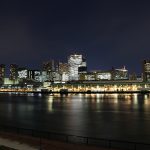
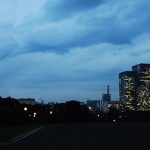
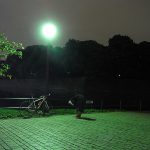
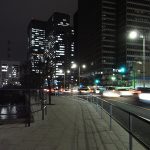
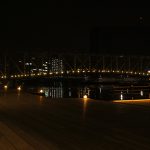
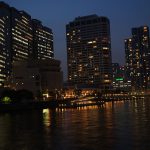
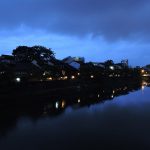
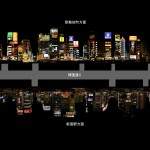
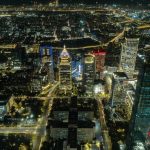
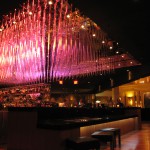
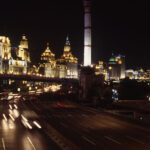
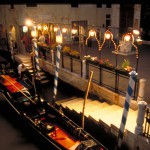
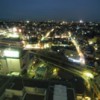
Bangkok, a city in a swirl of on-going change. In our previous survey of Tokyo’s Kanda River, we discover that the backs of buildings face the river creating and area of dark contrast in the middle of the city. But here along the Chaopraya River the opposite is true with the front facades lining the waterfront. Open-air restaurants and bars occupy the rooftops, as the spectacle of the city spreads out below. The Millennium Hilton, Bangkok, opened in May of 2006, is the first major hotel brand to open a hotel in the country in 20 years. The hotel boasts 543 riverfront rooms. With a UFO-like disk on top of the building, the cool-modern design stands tall among the neighboring structures. Along the riverfront, a private pier is provided for guests and dinners at the restaurant and bar. As river taxis come and go, the warm spots of light along the river reflect and shimmer on the water surface. Scirocco, one of many open-air restaurants, is approximately the same height as the special observation room at Tokyo Tower, 246 meters above ground, but without the glass barrier!. Without a glass window the lights of the city below seems so much more clear and real!! At the next table sat an older coupe that came to watch the sunset. The woman was surprised when presented with a big bouquet of flowers, undoubtedly a romantic gesture from her husband. A single candle…
2025.09.04-09.08 Yonglin Ke + Masashi Kurobe The nights in Honolulu are a diverse blend of resort illumination, residential lights, torches, and night market glows. However, as the city develops, the starry sky is fading, raising concerns about the impact on the local ecosystem. Balancing urban growth with light pollution countermeasures remains a significant challenge. We conducted an on-site night walk survey to explore the balance between the city and nature and to evaluate the current lighting environment. ■Honolulu Honolulu, the capital of the U.S. state of Hawaii, is a prominent tourist destination in the heart of the Pacific Ocean. Simultaneously, it serves as the political and economic hub of the state. In this land where the sea, mountains, and urban areas sit in close proximity, the nightscape reveals a variety of expressions depending on the time and location—blending the glow of resort hotels, the soft lights of residences, traditional fire torches, and the vibrant lights of night markets. Furthermore, the combination of intense sunlight and a tropical climate creates a unique character within the city’s lighting environment. On the other hand, urban development and the growth of the tourism industry have negatively impacted the visibility of the starry sky and affected local ecosystems, such as migratory birds and sea turtles. While the state and city have begun implementing measures to reduce light pollution, finding a balance with the tourism industry remains a challenge. During this night walk survey, we investigated…
2024.9.9 Yonglin Ke + Kunzhi Jinag + Linxi Chen The brightness (luminance) of signage lighting is key to shape the overall lighting of a city. This survey conducted in Akihabara, a globally famous district, focused on the renowned Akihabara Electric Town (Chuo-dori), analyzing the evolution of the city’s lighting composition by comparing it to the survey from 19 years ago. ■Akihabara Electric TownAkihabara is the heart of electronics in Tokyo and a globally famous hub for otaku culture. While it is bustling with tourists daily, the colors of the signs, filled with anime and game culture, are much more diverse compared to upscale commercial areas like Ginza or other shopping districts. In 2020, Chiyoda Ward released guidelines for outdoor advertising and urban development, leading to changes in Akihabara’s streetscape. This survey investigates the current night view of Akihabara Electric Town, comparing it to a survey conducted 19 years ago. (Kunzhi Jiang) ■What kind of lights shape Akihabara?The main lighting elements in Akihabara’s key districts include streetlights, signage lighting, building façade lighting, and lighting from store entrances and spillover light.Compared to the picture from 19 years ago, the most noticeable green and red lights from EDION were not illuminated due to the store’s closure. The ONODEN sign is now an LED screen, and the surrounding lighting has a more subdued feel. Previously, the area behind the bridge was completely dark, but now, with the bright lighting from a drugstore’s interior and…
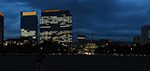
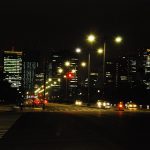
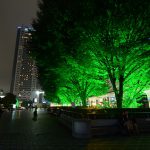
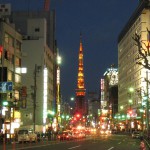
The Marunouchi district in the center of Tokyo has been transformed in recent years from a business and financial center to the latest redevelopment to intertwine commercial and office space. Our survey started in Marunouchi, as we closed in on the infamous Tokyo Tower to view the sprawling Tokyo nightscape. Marunouchi Central Street is enclosed on both sides by buildings all at the same height of 31 meters. Facade lighting and streetlights throw an even light over the street, creating a flat nightscape with no rhythm of light and shadow. Quite possibly occupying the staring role in the production of the Tokyo nightscape is the Tokyo Tower. The ironworks structure of this tower is illuminated from underneath, beautifully generating a glowing symbol for the city. At 250 meters, looking down on Tokyo from the tower is a beautiful site. Glare is blinding and there is no visible unified pattern to the lights of Tokyo, but lights twinkle all over the city and continue as far as the horizon. Things always look better from a distance and the Tokyo nightscape is one of them!
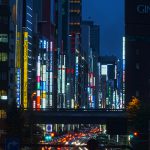
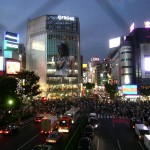
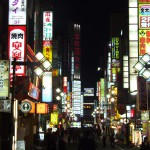
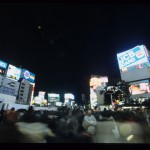
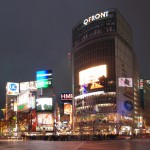
A city for the young and young at heart, Shibuya. The area is composed of a mess of streets all with a different atmosphere, including a few main streets connected by narrower alleyways. Each street has developed its own personality and role, including lighting conditions to create the Shibuya night. From the scramble intersection in front of Shibuya Station, 3 distinctive roads, Dogenzaka, Center Gai, and Koen Dori radiate. After dusk, the lights come on and the personality of each street is even more clearly defined. As the title implies, Center Gai is the center of Shibuya geographically and caters to the young as the center for shopping and entertainment. This street is full of light. Each shop seems to be competing for the brightest facade with infinite amounts of luminous signage and advertising, creating a 3-dimensional playground. Dogenzaka is a festive street with a steady flow of pedestrians, but turn down one of the narrow side streets and the atmosphere changes immensely. The facades of many love hotels packed into the area are saturated with color creating a seedy blend of light and young couples prowling the Maruyama-cho area.