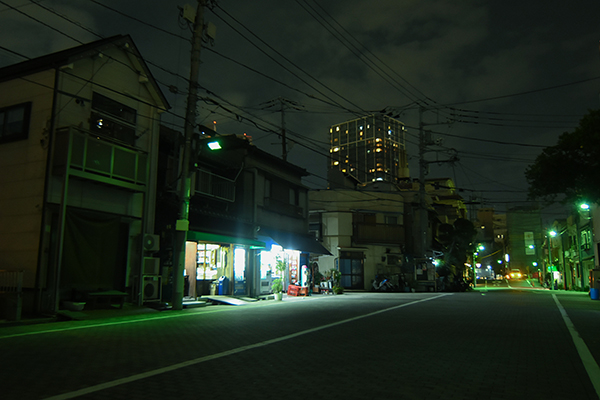
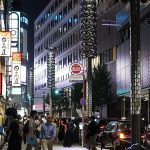
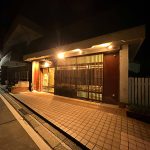
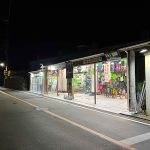
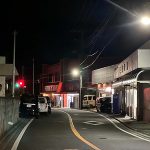
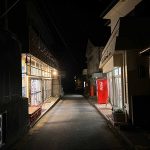
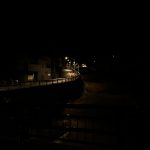
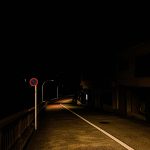
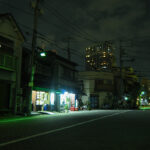
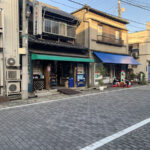
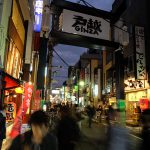
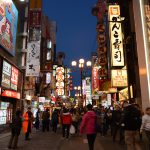
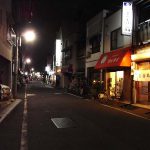
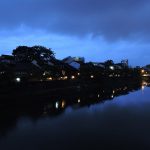
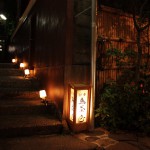
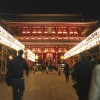
2022.11.4-5 Sachiko Segawa Surprisingly, this survey of the Sawara district marks the first time the Lighting Detectives have conducted an investigation within Chiba Prefecture. The team focused on an area designated both as an Important Preservation District for Groups of Traditional Buildings and as a Landscape Formation District. Here, the townscape of merchant houses, which flourished from the Edo period thanks to river transport on the Tone River, still remains. Located about 70 km from Tokyo Station and slightly inland from the Tone River, the Sawara district of Katori City once thrived as a merchant town, to the point it was said to rival Edo itself. However, the town declined during Japan’s period of rapid economic growth. Following a townscape survey in 1974, the value of its historic scenery was reappraised. Today, leveraging its convenient location—just two hours from Tokyo and one hour by train from Narita Airport—the area is being redeveloped as a tourist destination. For this survey, the team limited their scope to the townscape along the Ono River and conducted a nightscape survey. ■Uniquely Designed Lighting Fixtures From JR Narita Line Sawara Station, as we walked toward the Ono River, we were greeted by a bollard topped with a monkey. “Why a monkey…?” we wondered, but as we continued upstream along the river, we encountered bollards adorned with all sorts of figures: rabbits, carp, children, frogs, Ebisu, and more—each one different, with no two alike. These uniquely…
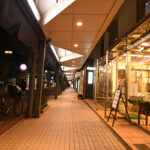
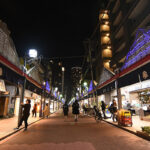
2022.10.27 Genki Watanabe+ Chuanyi Liu+ Yuki Ito This Tokyo night walk survey took place in Shimokitazawa, a neighborhood especially popular among young people. Known as one of Tokyo’s most culturally rich districts, the area is filled with vintage clothing shops, eateries, theaters, niche cinemas, and art galleries.The Lighting Detectives previously conducted a survey here in 2009. This time, we examined how the area has changed since the Odakyu Line was relocated underground. We also focused on the newly developed Shimokita Senrogai area, which opened on May 28, 2022, assessing its lighting design and comparing it with the older shopping streets to explore the contrast between new and traditional urban atmospheres. ■Map around Shimokitazawa Station With the Odakyu Line moved underground, a new neighborhood called Shimokita Senrogai was developed between Higashi-Kitazawa Station and Setagaya-Daita Station. Driven by the desire to support the community, redevelopment progressed step-by-step while listening to local residents’ voices. The entire area officially opened on May 28, 2022.Alongside the railway line, new facilities such as daycare centers, a hot spring inn, commercial spaces, student dormitories, and event venues were established. ■Development of Shimokita Senrogai The Shimokita Senrogai area we surveyed is a newly developed space created by moving the Odakyu Line underground. It was designed with the intention of reconnecting the northern and southern parts of the neighborhood that had previously been divided by the railway tracks, resulting in developments that encourage smooth pedestrian circulation throughout. The development features…
Zurich ⇒ Bern ⇒ Basel2018/04/12-04/17 Yumi Honda + Kyoko Takubo We visited Switzerland in search of places with light where people gather. Celebrating the longawaited arrival of spring, we found that more people than we expected were relaxing outdoors from morning until night. During the day, they enjoyed the abundant nature and beautiful cityscapes, soaking up the natural light. At night, people were chatting and laughing in a soft, gentle light. We climbed a dark hill for an elevated nightscape shot, but even there, it wasn’t tourists but locals who were gazing at the nightscape. We were able to find a city light in Switzerland that makes you want to spend a long, leisurely time there. People enjoying the sunset on the shores of Lake Zurich People Gathering on the Riverside in Basel, with Beers in Hand ■Waterside at DuskOn a warm spring evening, people gather on the shores of Lake Zurich. In open areas with a view, everyone enjoys the passing of time in their own way—a unique luxury. After the sun sets and the sky turns indigo, historical buildings from the Middle Ages are softly lit and reflected on the water’s surface. The reason this atmosphere can be enjoyed comes from a combination of historical background and urban planning.First, the number of cars is overwhelmingly small compared to other cities. The city is not obstructed by wide roads or traffic jams, so you can feel close to the river,…
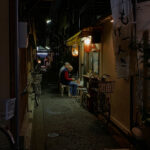
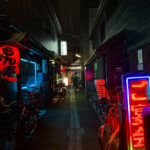
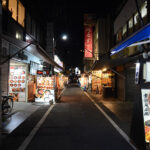
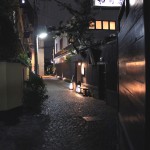
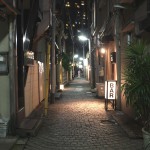
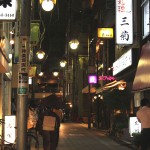
Modern Kagurazaka still conveys the atmosphere of its once flourishing Edo Era streets. Old Japanese restaurants and bars line the narrow alleyways and with softly glowing lantern light and welcome signs to complete the scene, one forgets that this is Shinjuku Ward in the middle of Tokyo. In this historical neighborhood warm lantern light is all but a natural presence. Compared to the white lights of Ikebukuro and Shinjuku glowing brightly in the distance, Kagurazaka is submerged in darkness. Buildings in Kagurazaka are lower and lower color-temperature light also peaks out from the many alleyways. Kagurazaka Street, running down the center of this neighborhood, is the only really bright spot, except for the lights reflecting off the canal along Sotobori Street. A prized neighborhood for shopping and entertainment during the Edo period, the historical Kagurazaka Shopping Street is a 700 meter long living time slip. New and old shops are jumbled together along the street with specially designed, lantern-like street lights placed at intervals along the edge of the sidewalk. From Kaguraza`s main street several narrow alleyways lead to the interior of the neighborhood where the scale of lighting is downsized to human proportions. Outside restaurants on Hyogo Yokocyo, one of the more famous back streets, softly glowing lanterns light the entrance and also reflect of the cobbled street and traditional-style fence for a very old Japanese atmosphere.
Kichijoji is an area of Tokyo where a variety of elements are compressed together to create this unique neighborhood. However, even though it seems to be a mixture of “stuff” the area is well planned and organized. Public and private organizations have aggressively worked together in city planning and we surveyed the area to discover what kind of lighting environment or rules they have advised. Starting on the north side of the station, a commercial area, we then moved to the south side of the station and Inogashira Park and the alleyways that connect the park and station. North Side of the Station The lighting along the covered arcade shopping streets, Sun Road and Diamond Street, are LEDs, creating a modern atmosphere, but down some of the narrower alleyways, like Harmonic Alley, the lighting is retro for an exciting nightly stroll. Park Street The main street from the station to Inogashira Park is a narrow 3-meter wide street lined with small cafes, bars, and recycled clothing and nick-nack shops. Restaurant and shop lighting is a warm 3000k for a comfortable atmosphere, but most street lighting spills out from the entrance to these restaurants and shops. Once they are closed for the night the street is very dark. Inogashira Park Equip with solor panels, tall metal halide streetlights record 331lx inside the park. However, the average lux level inside the park is about 30lx. The streetlights are too bright, and ruin…