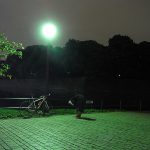
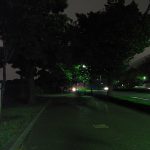
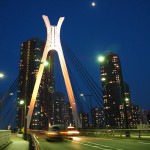
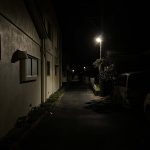
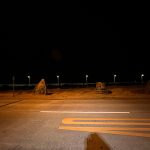
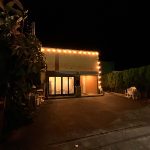
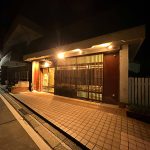
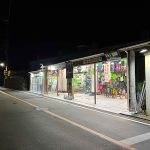
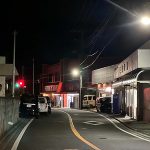
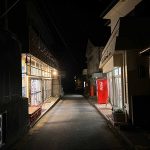
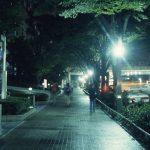
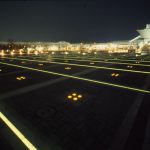
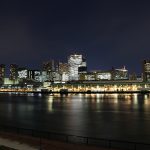
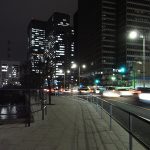
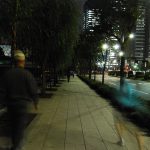
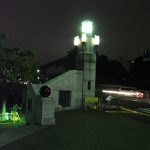
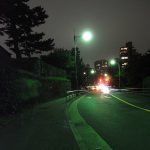
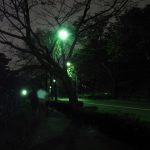
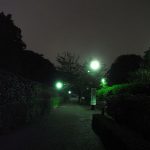
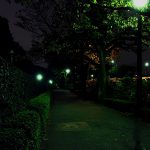
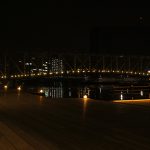
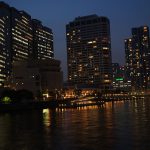
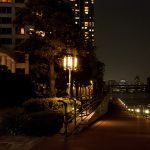
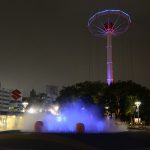
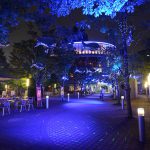
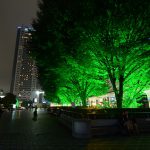
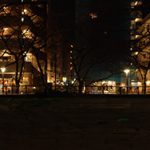
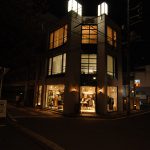
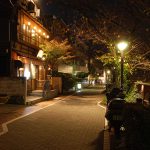
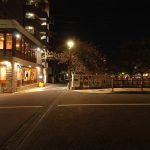
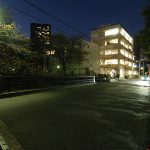
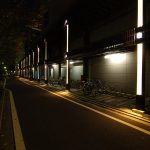
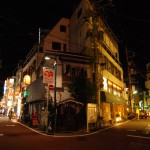
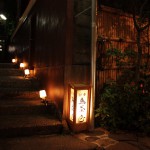
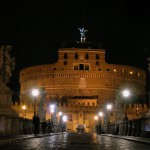
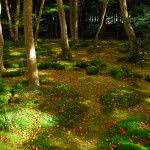
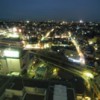
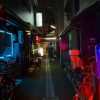
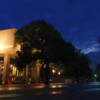
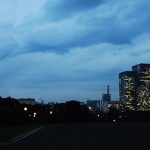
Rich in local history and cultural facilities, Ueno Park covers a large area in the middle of Tokyo. Even though located in an urban setting, we anticipated a lighting environment completely different than the lights of downtown. Between the trees and darkness of the park there are patches of Tokyo`s bright night sky, but the hushed silence is isolated from the city`s hustle and bustle. Ueno Park`s quiet presence gently sleeps next to Tokyo`s vibrant downtown. Approaching Ueno Park from the JR train station. The large overhang of the Tokyo Bunka Kaikan is brightly illuminated in contrast to the surrounding darkness of the park. A view o f northern Tokyo over the Shinobazu Pond from an elevated Ueno terrace. The bright lights of a vibrant downtown are seen in the distance beyond the dark trees of the park. However, through the darkness a bright, orange, sodium lamp illuminates the Benten Shrine near the pond. Looking towards the water fountain plaza from the Tokyo National Museum. A slightly bright night sky, characteristic of most metropolitan areas, opens over head with a dark belt of trees and tiny dots of light below. Young couples seeking a quiet spot away from the lights, snuggle up together on near benches.
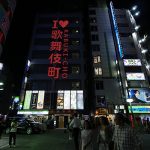
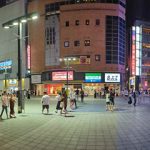
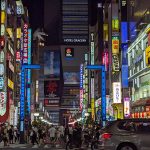
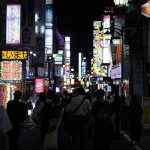
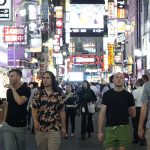
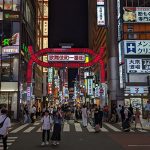
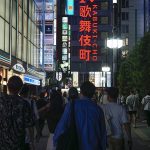
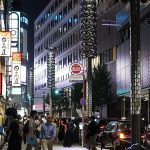
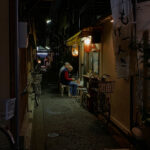
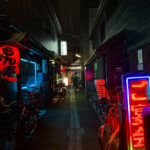
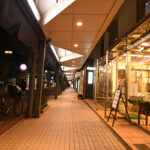
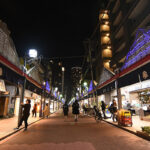
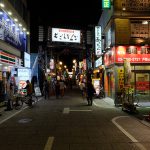
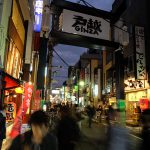
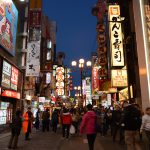
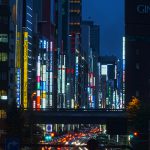
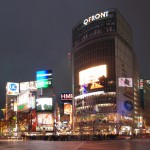
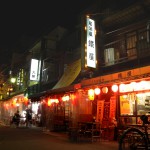
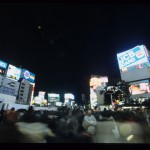
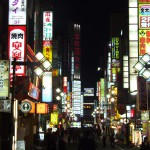
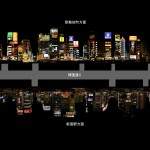
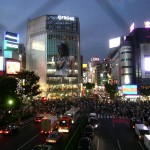
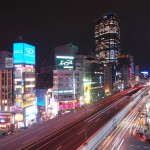
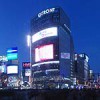
Under a rush of redevelopment, this is a huge period of transition for the area surrounding Shinjuku. On this survey, we were met by soft light filtering out of tall skyscraper windows, brilliant signage on facades and rooftops, and crowds of people along the streets and alleyways. Shinjuku Station South Entrance is in the middle of a redevelopment project scheduled to be complete in 5 years. A multitude of fluorescent lights line the pedestrian walkways with such an intense brightness that the surrounding scene is almost invisible. Six o`clock in the morning and waiting for the sun to come up on Yasukuni Street. Calm is finally starting to settle over Kabukicho, but still brightly lit signage are but glaring reminders of the nightlife. Brilliant advertising and signage along Yasukuni Street acts as an entrance gate to Kabukicyou. The bight lights entice many, who are aimlessly swallowed up by Kabukicho.
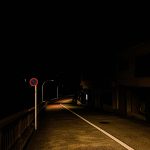
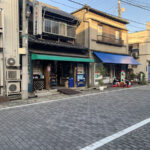
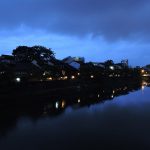
2022.11.4-5 Sachiko Segawa Surprisingly, this survey of the Sawara district marks the first time the Lighting Detectives have conducted an investigation within Chiba Prefecture. The team focused on an area designated both as an Important Preservation District for Groups of Traditional Buildings and as a Landscape Formation District. Here, the townscape of merchant houses, which flourished from the Edo period thanks to river transport on the Tone River, still remains. Located about 70 km from Tokyo Station and slightly inland from the Tone River, the Sawara district of Katori City once thrived as a merchant town, to the point it was said to rival Edo itself. However, the town declined during Japan’s period of rapid economic growth. Following a townscape survey in 1974, the value of its historic scenery was reappraised. Today, leveraging its convenient location—just two hours from Tokyo and one hour by train from Narita Airport—the area is being redeveloped as a tourist destination. For this survey, the team limited their scope to the townscape along the Ono River and conducted a nightscape survey. ■Uniquely Designed Lighting Fixtures From JR Narita Line Sawara Station, as we walked toward the Ono River, we were greeted by a bollard topped with a monkey. “Why a monkey…?” we wondered, but as we continued upstream along the river, we encountered bollards adorned with all sorts of figures: rabbits, carp, children, frogs, Ebisu, and more—each one different, with no two alike. These uniquely…
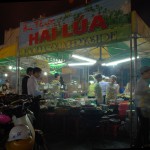
2024.05.16 – 05.19 Mari Kubota+ Noriko Higashi Busan, South Korea’s second-largest city, is one of the world’s major port cities. In recent years, it has also gained fame as a hub for tourism and film. We surveyed the lighting in Busan, which is also a member of LUCI (Lighting Urban Community International). South Korea is a close neighbor, just 1.5 hours from Tokyo by plane, making it a popular destination for quick and affordable trips. Busan, the second-largest city in South Korea, is not only a tourist destination but also a major port and an entertainment center, hosting film festivals. As a member of LUCI, Busan has been focusing on urban lighting as part of its urban planning. In 2015, the city developed an extensive overview of its nightscapes, resulting in the Busan Urban Light Policy for 2030. This policy has been updated several times, reflecting the city’s ongoing efforts in implementation and improvement. The guidelines divide Busan into several zones, each with lighting tailored to its specific characteristics.We traveled to Busan to assess whether the city’s lighting contributes to safety, beauty, attractiveness, and the local economy at night. ■Jagalchi Market Jagalchi Market is South Korea’s largest seafood market, selling both fresh and dried fish. After purchasing seafood on the first floor, visitors can have it cooked and served on the second floor. The market attracts many tourists. White lights are used to illuminate the seafood, making it look as…
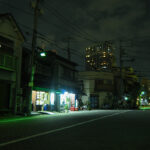
2022.10.27 Genki Watanabe+ Chuanyi Liu+ Yuki Ito This Tokyo night walk survey took place in Shimokitazawa, a neighborhood especially popular among young people. Known as one of Tokyo’s most culturally rich districts, the area is filled with vintage clothing shops, eateries, theaters, niche cinemas, and art galleries.The Lighting Detectives previously conducted a survey here in 2009. This time, we examined how the area has changed since the Odakyu Line was relocated underground. We also focused on the newly developed Shimokita Senrogai area, which opened on May 28, 2022, assessing its lighting design and comparing it with the older shopping streets to explore the contrast between new and traditional urban atmospheres. ■Map around Shimokitazawa Station With the Odakyu Line moved underground, a new neighborhood called Shimokita Senrogai was developed between Higashi-Kitazawa Station and Setagaya-Daita Station. Driven by the desire to support the community, redevelopment progressed step-by-step while listening to local residents’ voices. The entire area officially opened on May 28, 2022.Alongside the railway line, new facilities such as daycare centers, a hot spring inn, commercial spaces, student dormitories, and event venues were established. ■Development of Shimokita Senrogai The Shimokita Senrogai area we surveyed is a newly developed space created by moving the Odakyu Line underground. It was designed with the intention of reconnecting the northern and southern parts of the neighborhood that had previously been divided by the railway tracks, resulting in developments that encourage smooth pedestrian circulation throughout. The development features…