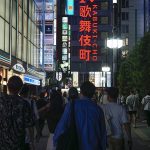
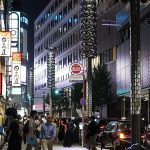
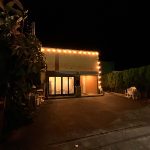
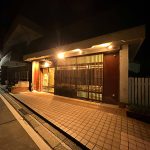
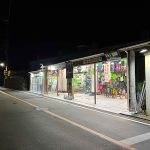
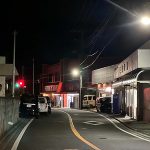
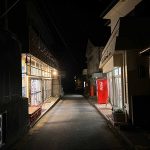
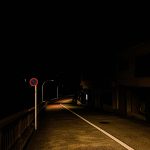
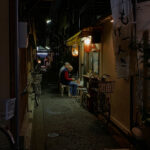
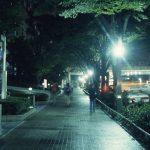
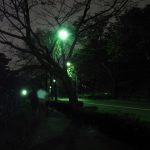
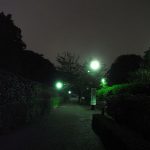
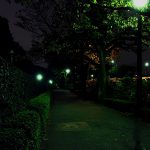
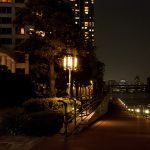
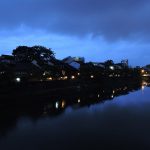
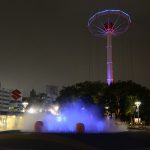
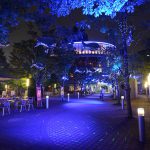
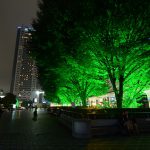
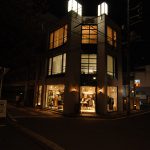
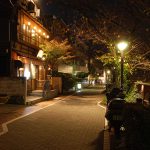
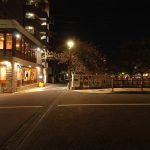
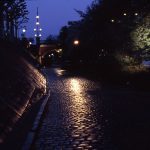
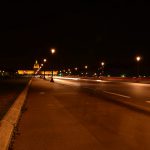
2025.09.04-09.08 Yonglin Ke + Masashi Kurobe The nights in Honolulu are a diverse blend of resort illumination, residential lights, torches, and night market glows. However, as the city develops, the starry sky is fading, raising concerns about the impact on the local ecosystem. Balancing urban growth with light pollution countermeasures remains a significant challenge. We conducted an on-site night walk survey to explore the balance between the city and nature and to evaluate the current lighting environment. ■Honolulu Honolulu, the capital of the U.S. state of Hawaii, is a prominent tourist destination in the heart of the Pacific Ocean. Simultaneously, it serves as the political and economic hub of the state. In this land where the sea, mountains, and urban areas sit in close proximity, the nightscape reveals a variety of expressions depending on the time and location—blending the glow of resort hotels, the soft lights of residences, traditional fire torches, and the vibrant lights of night markets. Furthermore, the combination of intense sunlight and a tropical climate creates a unique character within the city’s lighting environment. On the other hand, urban development and the growth of the tourism industry have negatively impacted the visibility of the starry sky and affected local ecosystems, such as migratory birds and sea turtles. While the state and city have begun implementing measures to reduce light pollution, finding a balance with the tourism industry remains a challenge. During this night walk survey, we investigated…
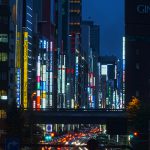
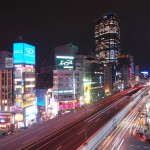
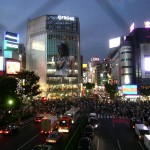
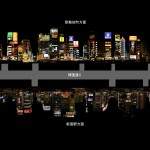
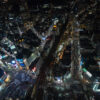
2022.07.11 Hikaru Kimura + Yonglin Ke + Xueying Piao Shibuya, known as a youth hub, began redevelopment in 2012, transforming into a business district with a cluster of new office buildings and commercial facilities. While many new restaurants have emerged, traditional drinking alleys remain intact. This survey investigates the contrasting night scenes of the new and old Shibuya. ■Overlooking Nightscape of ShibuyaFrom the Shibuya Scramble Square, the rooftop of Miyashita Park stands out prominently to the east of the central railway tracks. The warm glow along the podium belongs to Shibuya Yokocho (alley). Nestled beside the pitch-black railway tracks and appearing as a dotted red line is Nonbei Yokocho. Viewed from above, Nonbei Yokocho exuded a soft, flickering light, resembling candles, in contrast to the lively and vibrant atmosphere of Shibuya Yokocho.The overall nightscape, divided by the Yamanote Line tracks, presents a striking contrast: the western side is dominated by tall buildings, densely packed with billboards and advertisements, exuding the lively energy of a traditional entertainment district. The eastern side, on the other hand, has fewer billboards and subdued signage, giving it a unified and calm appearance.I wonder if Shibuya will eventually become a more standardized urban landscape, much like its eastern side. Personally, I felt the bustling, nostalgic charm of the western side embodies the true spirit of Shibuya, and it’s something worth preserving. (Yonglin Ke) ■Shibuya YokochoRAYARD MIYASHITA PARK, a new landmark in Shibuya, features Shibuya Yokocho, a 100-meter-long…
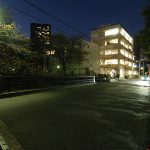
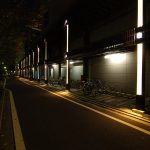
The Diversity of Condominium Lighting in the Tokyo Area Condominiums play a leading role in housing for the Tokyo Area. As the city grew, busy shopping, business, and entertainment districts are supported by the residences, which live in densely populated residential areas. As the population density increased so did the proportion of condominiums for housing. According to reality statistics, condominiums account for 70% of the housing within the 23 wards of Tokyo. For this survey we stepped away from the bustle of the big city and investigated 3 relatively large, densely populated condominium complexes. The three areas all have a different history and commuting distances from the center of Tokyo. What can we discover about the lighting environment of these three totally different condominiums and the surrounding residential area? Toyosu Once an industrial area built on reclaimed land, housing redevelopment started in 2003 and the first of several residential blocks was completed in 2006. Toyosu is a “new city”, built from scratch and popular with younger families and couples. The number of condominiums is astounding, but the development is not just large, but a luxurious residential area as well. Color temperature viewed from the condominium windows: Orange: 80% White: 16% Bluish: 4% The tower condominiums are immediately visible upon leaving the station. Relatively close to the center of Tokyo, these tower condominiums were built during a boom in condominium real estate. Each tower has a luxurious entrance lobby and…
City Night Survey- Chiang Mai Lantern Festival 2023.11.25 – 11.29 Angkana Kongchatri (Tan)+Momoko Muraoka Chiang Mai is the second largest city in Thailand which has special atmosphere tracing from Lannar kingdom period. Tan from Bangkok and Momoko from Tokyo traveled to the city for a survey. ■Back ground of the survey The lantern festival in Chiang Mai has been getting very high attention from international tourists since a couple of decades ago. Due to its visual appeal, the festival has become an explosively hot tourist spot and activity. As number of tourists raise up, the negative side of the festival also becoming a serious issue, such as the risks of fire and abandoned trashes which cause suffering to local people. In this SNS era, the speed and frequency of exchanging information has become extremely heavy than ever. When very local culture gets intensive attention from unidentified crowds, then the one to retain the culture need to face and respond the troubles to come with the anonymous attention which is also happening on the lantern festival in Chiang Mai. Festivals with lights are attractive. However, overlooking the wastes happening materially and culturally cannot be accepted anymore. Through this survey, we aim to observe not only the bright side but also the problems and struggles behind which could relate with many other traditional lighting festivals. We believe that the approach could bring another layer of depth for the lighting detective activity with…
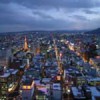
The Television Broadcasting Tower looks down on the orange sodium lamps overflowing from the grid patterned streets of Sapporo. While on assignment in December we were able to view the multi-colored White Illumination set up along Ohdori Park and Sappore Eki Mae Street. Looking towards Ohdori Promenade from the JR Tower. Sapporo is a beautiful city at twilight with orange light from the streets to set off the blue-tinted snow-topped roofs. The tree-lined street, Sapporo Ekimae Avenue is a sight to see with its unique style of looping lights over tree branches. Visitors with cameras and mobile phones converge on the decorated Ohdori Promenade. Sapporo Television Tower, similar to Tokyo Tower and Nagoya Tower, and all designed by the same architect, is also illuminated with the same type of sodium lamp.