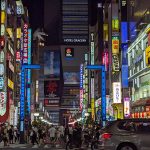
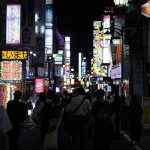
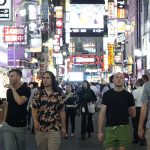
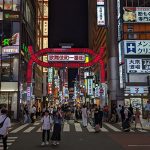
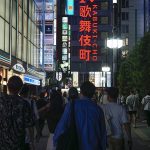
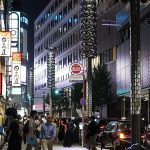
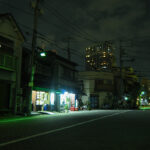
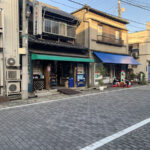
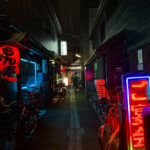
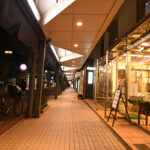
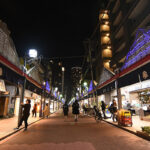
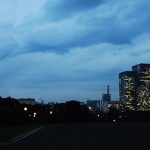
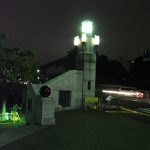
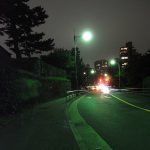
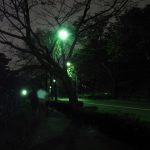
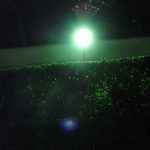
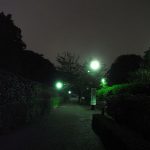
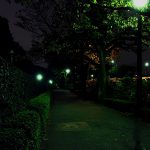
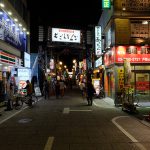
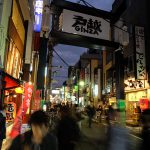
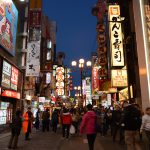
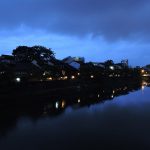
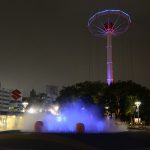
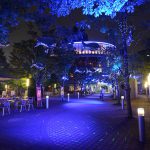
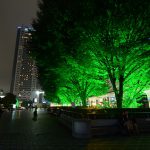
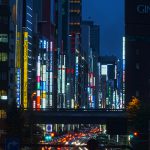
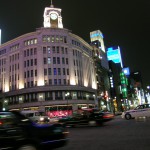
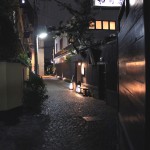
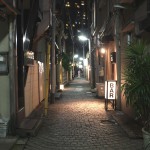
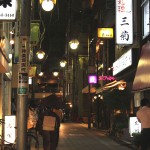
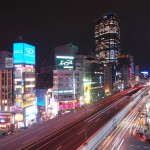
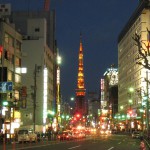
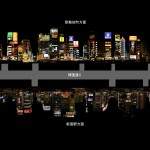
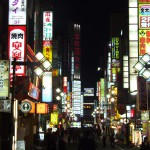
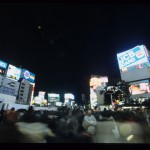
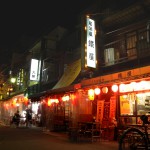
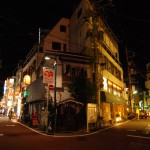
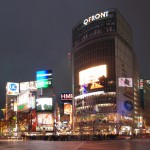
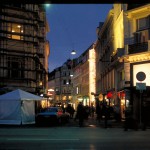
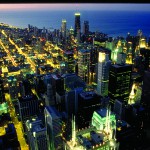
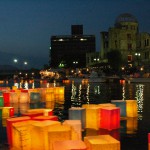
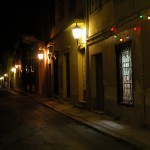
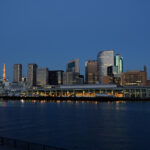
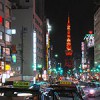
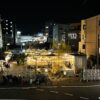
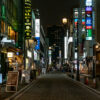
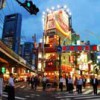
Roppongi has many faces including, an entertainment district with a foreign twist, new offices for daily business, and is developing as a center for the Tokyo art scene. The Lighting Detectives sped around on their bikes in April to discover what kind of light exists in this multi-functional area. The presence of the entertainment district is strongly felt at Roppongi intersection. Most people recognize this intersection as the center of Roppongi, but in recent years new development has created two new areas of focus, leaving the center of Roppongi very ambiguous. Points of reference include Mori Tower, Midtown Tower, Tokyo Tower and the metropolitan expressway, that cuts through, dividing this area of Tokyo. Large-scale luminous signage and a collage of other miscellaneous lighting dominate the view. Looking toward Roppongi from Aoyama Cemetery. The 3 towers that stand pronounced over Roppongi are a product of power and force, but appear alien in this setting. The towers look close and, yet, far off, as this scene can play tricks on your eyes.
2022.10.27 Genki Watanabe+ Chuanyi Liu+ Yuki Ito This Tokyo night walk survey took place in Shimokitazawa, a neighborhood especially popular among young people. Known as one of Tokyo’s most culturally rich districts, the area is filled with vintage clothing shops, eateries, theaters, niche cinemas, and art galleries.The Lighting Detectives previously conducted a survey here in 2009. This time, we examined how the area has changed since the Odakyu Line was relocated underground. We also focused on the newly developed Shimokita Senrogai area, which opened on May 28, 2022, assessing its lighting design and comparing it with the older shopping streets to explore the contrast between new and traditional urban atmospheres. ■Map around Shimokitazawa Station With the Odakyu Line moved underground, a new neighborhood called Shimokita Senrogai was developed between Higashi-Kitazawa Station and Setagaya-Daita Station. Driven by the desire to support the community, redevelopment progressed step-by-step while listening to local residents’ voices. The entire area officially opened on May 28, 2022.Alongside the railway line, new facilities such as daycare centers, a hot spring inn, commercial spaces, student dormitories, and event venues were established. ■Development of Shimokita Senrogai The Shimokita Senrogai area we surveyed is a newly developed space created by moving the Odakyu Line underground. It was designed with the intention of reconnecting the northern and southern parts of the neighborhood that had previously been divided by the railway tracks, resulting in developments that encourage smooth pedestrian circulation throughout. The development features…
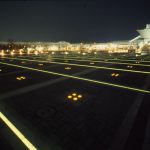
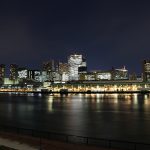
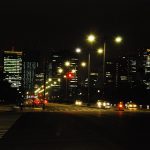
2021.10.27 Shunichi Ikeda + Erina Hosono + Namiko Watanabe About three weeks after the state of emergency in Tokyo was lifted, we conducted our first urban night walk survey since the COVID-19 outbreak, heading to Akasaka. The area between Akasaka and Akasaka-mitsuke features both traditional establishments such as atmospheric ryotei (Japanesestyle restaurants) and neon-lit entertainment districts reminiscent of Kabukicho. At the same time, Akasaka has gained recognition as a tourist destination due to redevelopment centered around Akasaka Sacas. We surveyed the nighttime environment of this area where tradition, business, and nightlife coexist. ■Aerial Nightscape of AkasakaThe central area of Akasaka lies roughly in the middle of the cluster of high-rise buildings. At first glance, the nightscape viewed from above gives a rather subdued impression, due to the lack of prominent building illuminations or large advertising towers. However, upon closer inspection, one can see clusters of commercial lights peeking through the gaps between buildings. While the limited presence of dramatic lighting or decorative illuminations may make it less visually striking, the overall effect is a calm and environmentally friendly nightscape. ■Akasaka Sacas AreaAkasaka Sacas, a multi-use complex directly connected to Akasaka Station, is usually frequented by businesspeople and shoppers. However, likely due to the lingering effects of the COVID-19 pandemic, the number of passersby during our survey was surprisingly low, which was unfortunate. The nighttime lighting around the base of the 179-meter-tall Akasaka Biz Tower is uniformly set to a relatively low…
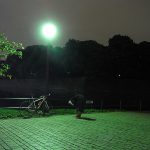
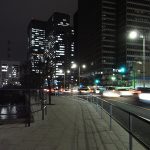
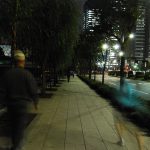
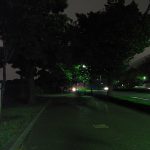
2024.9.9 Yonglin Ke + Kunzhi Jinag + Linxi Chen The brightness (luminance) of signage lighting is key to shape the overall lighting of a city. This survey conducted in Akihabara, a globally famous district, focused on the renowned Akihabara Electric Town (Chuo-dori), analyzing the evolution of the city’s lighting composition by comparing it to the survey from 19 years ago. ■Akihabara Electric TownAkihabara is the heart of electronics in Tokyo and a globally famous hub for otaku culture. While it is bustling with tourists daily, the colors of the signs, filled with anime and game culture, are much more diverse compared to upscale commercial areas like Ginza or other shopping districts. In 2020, Chiyoda Ward released guidelines for outdoor advertising and urban development, leading to changes in Akihabara’s streetscape. This survey investigates the current night view of Akihabara Electric Town, comparing it to a survey conducted 19 years ago. (Kunzhi Jiang) ■What kind of lights shape Akihabara?The main lighting elements in Akihabara’s key districts include streetlights, signage lighting, building façade lighting, and lighting from store entrances and spillover light.Compared to the picture from 19 years ago, the most noticeable green and red lights from EDION were not illuminated due to the store’s closure. The ONODEN sign is now an LED screen, and the surrounding lighting has a more subdued feel. Previously, the area behind the bridge was completely dark, but now, with the bright lighting from a drugstore’s interior and…
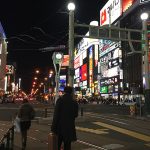
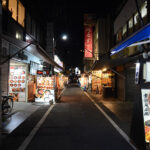
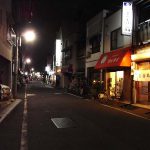
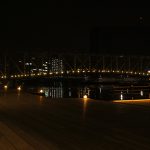
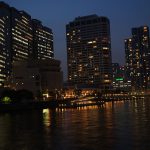
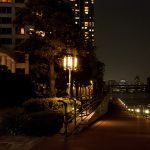
Shiodome Sio-Site was a joint public and private sector redevelopment project completed in 2006. In nearby Shinbashi, eateries and bars built under and into the brick structure of the elevated railway tracks during the Meiji era have become a famous cityscape of this area. We set out to discover what kind of lighting environment exists in this conflicting neighborhood of Tokyo. Red lanterns, single light bulbs hanging under the eaves, colorful luminous signage…All the lighting is warm and inviting. The lighting environment along the streets of Shinbashi is wide and varied, but somehow closes the distance between strangers. Lighting for an elevated pedestrian deck connecting high-rise buildings in the area. The warm colored lighting creates a comfortable atmosphere for a nighttime stroll. The Shiodome high-rise buildings are not showy, and along with the interior office lighting, only a few have facade lighting on the building crowns.