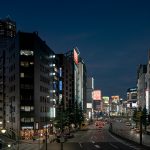
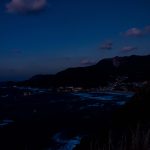
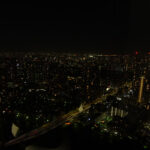
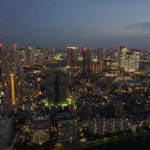
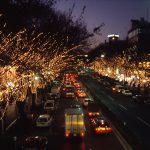
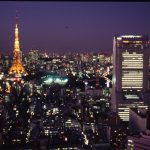
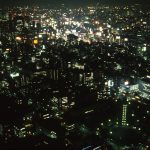
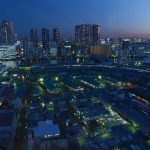
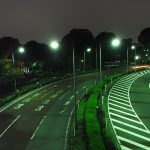
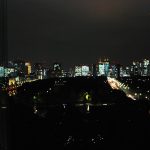
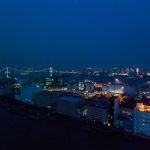
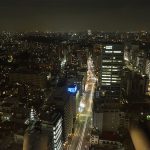
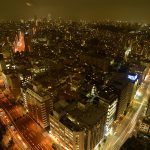
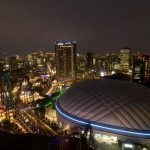
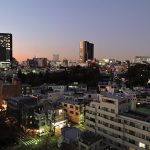
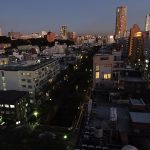
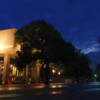
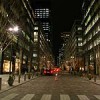
In the middle of Tokyo is the Imperial Palace, a haven for runners and tourists, alike. The lighting in the palace outer garden and nearby Wadakura Fountain Park has been renewed and replaced with environmentally conscious LED fixtures. We surveyed the unique pocket of darkness that surrounds the Imperial Palace along with lighting environment of nearby parks and roads. Imperial Palace Outer Garden. The fancy pole lights in the outer garden are originally gas lamps, but the light source has been changed to high-pressure sodium lamps and now upgraded to LEDs. The average lux level is only 1-2lux along the paths lined with these LED fixtures, but inside the fixtures are 6, 26watt LED modules all pointed in different directions. This application helps to spread the light around without making a too bright, but comfortably dim atmosphere. Daikancho Street Daikancho Street runs along the north side of the palace grounds, is a much narrower street and pedestrian sidewalk compared with the rest of the facilities surrounding the palace. Along the tidy, hedged sidewalk, streetlights are placed at 3-meter intervals. Mostly for crime prevention, the lights are very bright and glaring. Ohtemachi Entrance The Ohtemachi Entrance area leads to an inner palace garden and is surrounded by a main arterial road on the outside, for a very open and accessible area. Most lighting is road lighting, mounted on 10-meter tall poles arranged down the middle of the street, but plenty bright…
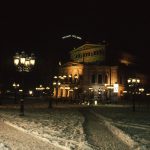
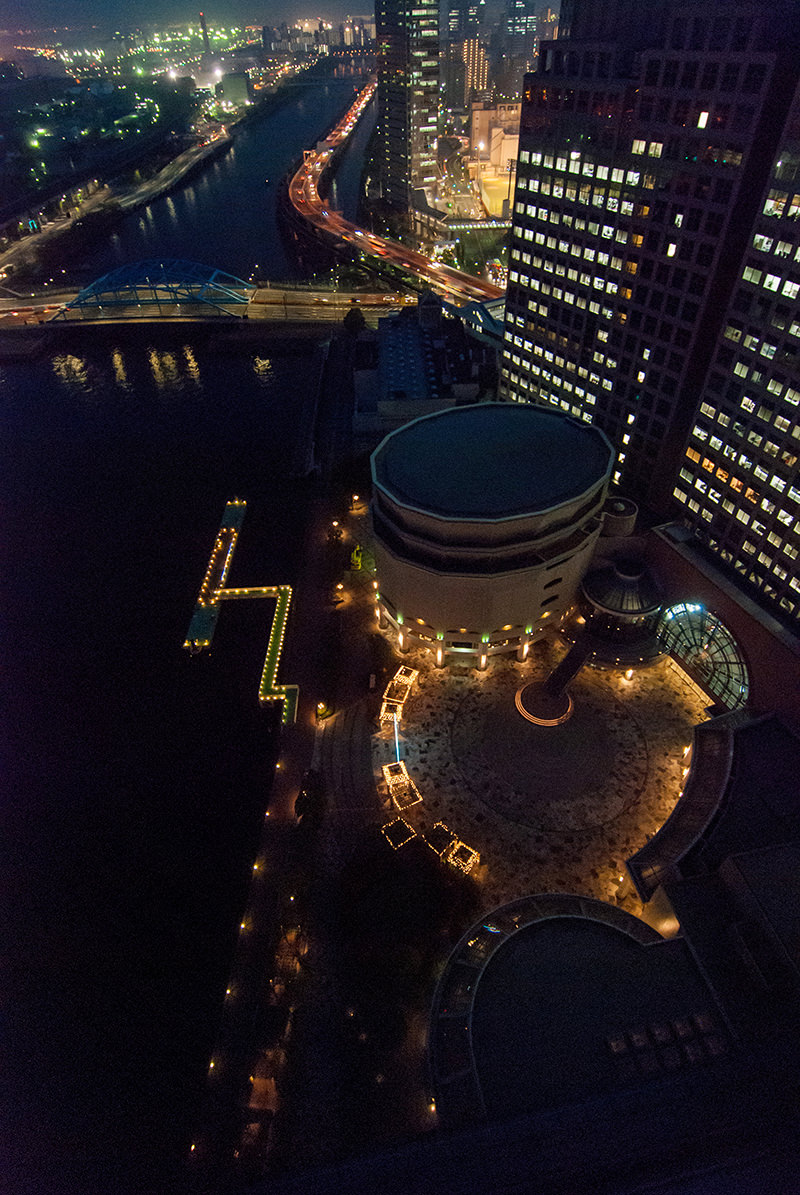
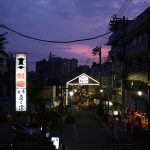
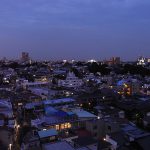
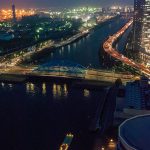
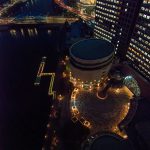
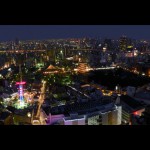
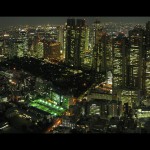
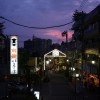
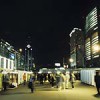
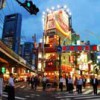
Shiodome Sio-Site was a joint public and private sector redevelopment project completed in 2006. In nearby Shinbashi, eateries and bars built under and into the brick structure of the elevated railway tracks during the Meiji era have become a famous cityscape of this area. We set out to discover what kind of lighting environment exists in this conflicting neighborhood of Tokyo. Red lanterns, single light bulbs hanging under the eaves, colorful luminous signage…All the lighting is warm and inviting. The lighting environment along the streets of Shinbashi is wide and varied, but somehow closes the distance between strangers. Lighting for an elevated pedestrian deck connecting high-rise buildings in the area. The warm colored lighting creates a comfortable atmosphere for a nighttime stroll. The Shiodome high-rise buildings are not showy, and along with the interior office lighting, only a few have facade lighting on the building crowns.
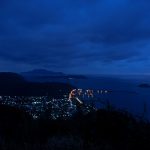
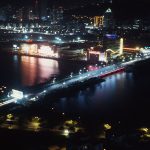
2024.05.16 – 05.19 Mari Kubota+ Noriko Higashi Busan, South Korea’s second-largest city, is one of the world’s major port cities. In recent years, it has also gained fame as a hub for tourism and film. We surveyed the lighting in Busan, which is also a member of LUCI (Lighting Urban Community International). South Korea is a close neighbor, just 1.5 hours from Tokyo by plane, making it a popular destination for quick and affordable trips. Busan, the second-largest city in South Korea, is not only a tourist destination but also a major port and an entertainment center, hosting film festivals. As a member of LUCI, Busan has been focusing on urban lighting as part of its urban planning. In 2015, the city developed an extensive overview of its nightscapes, resulting in the Busan Urban Light Policy for 2030. This policy has been updated several times, reflecting the city’s ongoing efforts in implementation and improvement. The guidelines divide Busan into several zones, each with lighting tailored to its specific characteristics.We traveled to Busan to assess whether the city’s lighting contributes to safety, beauty, attractiveness, and the local economy at night. ■Jagalchi Market Jagalchi Market is South Korea’s largest seafood market, selling both fresh and dried fish. After purchasing seafood on the first floor, visitors can have it cooked and served on the second floor. The market attracts many tourists. White lights are used to illuminate the seafood, making it look as…
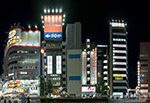
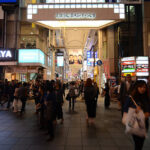
2024.9.9 Yonglin Ke + Kunzhi Jinag + Linxi Chen The brightness (luminance) of signage lighting is key to shape the overall lighting of a city. This survey conducted in Akihabara, a globally famous district, focused on the renowned Akihabara Electric Town (Chuo-dori), analyzing the evolution of the city’s lighting composition by comparing it to the survey from 19 years ago. ■Akihabara Electric TownAkihabara is the heart of electronics in Tokyo and a globally famous hub for otaku culture. While it is bustling with tourists daily, the colors of the signs, filled with anime and game culture, are much more diverse compared to upscale commercial areas like Ginza or other shopping districts. In 2020, Chiyoda Ward released guidelines for outdoor advertising and urban development, leading to changes in Akihabara’s streetscape. This survey investigates the current night view of Akihabara Electric Town, comparing it to a survey conducted 19 years ago. (Kunzhi Jiang) ■What kind of lights shape Akihabara?The main lighting elements in Akihabara’s key districts include streetlights, signage lighting, building façade lighting, and lighting from store entrances and spillover light.Compared to the picture from 19 years ago, the most noticeable green and red lights from EDION were not illuminated due to the store’s closure. The ONODEN sign is now an LED screen, and the surrounding lighting has a more subdued feel. Previously, the area behind the bridge was completely dark, but now, with the bright lighting from a drugstore’s interior and…
City Night Survey- Chiang Mai Lantern Festival 2023.11.25 – 11.29 Angkana Kongchatri (Tan)+Momoko Muraoka Chiang Mai is the second largest city in Thailand which has special atmosphere tracing from Lannar kingdom period. Tan from Bangkok and Momoko from Tokyo traveled to the city for a survey. ■Back ground of the survey The lantern festival in Chiang Mai has been getting very high attention from international tourists since a couple of decades ago. Due to its visual appeal, the festival has become an explosively hot tourist spot and activity. As number of tourists raise up, the negative side of the festival also becoming a serious issue, such as the risks of fire and abandoned trashes which cause suffering to local people. In this SNS era, the speed and frequency of exchanging information has become extremely heavy than ever. When very local culture gets intensive attention from unidentified crowds, then the one to retain the culture need to face and respond the troubles to come with the anonymous attention which is also happening on the lantern festival in Chiang Mai. Festivals with lights are attractive. However, overlooking the wastes happening materially and culturally cannot be accepted anymore. Through this survey, we aim to observe not only the bright side but also the problems and struggles behind which could relate with many other traditional lighting festivals. We believe that the approach could bring another layer of depth for the lighting detective activity with…