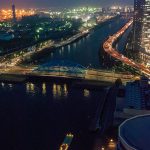
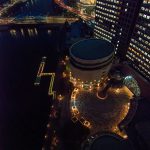
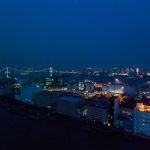
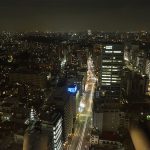
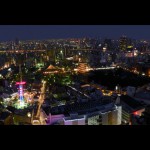
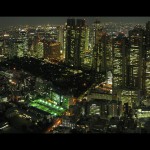
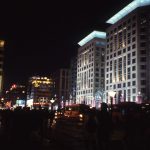
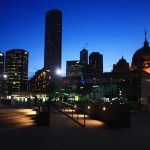
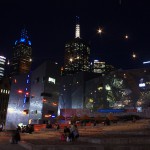
City Night Survey- Chiang Mai Lantern Festival 2023.11.25 – 11.29 Angkana Kongchatri (Tan)+Momoko Muraoka Chiang Mai is the second largest city in Thailand which has special atmosphere tracing from Lannar kingdom period. Tan from Bangkok and Momoko from Tokyo traveled to the city for a survey. ■Back ground of the survey The lantern festival in Chiang Mai has been getting very high attention from international tourists since a couple of decades ago. Due to its visual appeal, the festival has become an explosively hot tourist spot and activity. As number of tourists raise up, the negative side of the festival also becoming a serious issue, such as the risks of fire and abandoned trashes which cause suffering to local people. In this SNS era, the speed and frequency of exchanging information has become extremely heavy than ever. When very local culture gets intensive attention from unidentified crowds, then the one to retain the culture need to face and respond the troubles to come with the anonymous attention which is also happening on the lantern festival in Chiang Mai. Festivals with lights are attractive. However, overlooking the wastes happening materially and culturally cannot be accepted anymore. Through this survey, we aim to observe not only the bright side but also the problems and struggles behind which could relate with many other traditional lighting festivals. We believe that the approach could bring another layer of depth for the lighting detective activity with…
Zurich ⇒ Bern ⇒ Basel2018/04/12-04/17 Yumi Honda + Kyoko Takubo We visited Switzerland in search of places with light where people gather. Celebrating the longawaited arrival of spring, we found that more people than we expected were relaxing outdoors from morning until night. During the day, they enjoyed the abundant nature and beautiful cityscapes, soaking up the natural light. At night, people were chatting and laughing in a soft, gentle light. We climbed a dark hill for an elevated nightscape shot, but even there, it wasn’t tourists but locals who were gazing at the nightscape. We were able to find a city light in Switzerland that makes you want to spend a long, leisurely time there. People enjoying the sunset on the shores of Lake Zurich People Gathering on the Riverside in Basel, with Beers in Hand ■Waterside at DuskOn a warm spring evening, people gather on the shores of Lake Zurich. In open areas with a view, everyone enjoys the passing of time in their own way—a unique luxury. After the sun sets and the sky turns indigo, historical buildings from the Middle Ages are softly lit and reflected on the water’s surface. The reason this atmosphere can be enjoyed comes from a combination of historical background and urban planning.First, the number of cars is overwhelmingly small compared to other cities. The city is not obstructed by wide roads or traffic jams, so you can feel close to the river,…
2023.01.20-01.22 Yuichi Anzai+ Chuanyi Liu ■Kozushima Village Kozushima is located about 180 kilometers south of central Tokyo with a population of about 1,800. The terrain is complex, with almost no flat land. The village is located in the center of the island at the foot of Mt. Tenjo. The impetus for the starry sky protection activities on Kozushima came from a comment made during a student internship program by the Tourism Foundation in 2016, that the night sky was as beautiful as a planetarium. The starry sky, a common sight on the island, has become a tourism resource. An island-wide effort to protect the sky began. Specific efforts include replacing streetlights and security lights with fixtures with 0% upward luminous flux and 2,700K color temperature, holding explanatory meetings for residents and regular workshops with experts to gain their understanding and cooperation in light pollution and starry sky protection activities, training islanders as guides, and holding star gazing events to protect the night sky from light pollution and communicate the appeal of the starry sky both on and off the island. The island is also working to protect the night sky from light pollution and convey the charm of the starry sky to the public. The “Light Pollution Prevention Ordinance to Protect the Beautiful Starry Sky of Kozushima Village,” which specifies the responsibilities of residents and businesses to prevent light pollution, will be enacted in 2019, and rules are being developed to…
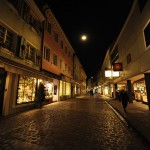
Modern Kagurazaka still conveys the atmosphere of its once flourishing Edo Era streets. Old Japanese restaurants and bars line the narrow alleyways and with softly glowing lantern light and welcome signs to complete the scene, one forgets that this is Shinjuku Ward in the middle of Tokyo. In this historical neighborhood warm lantern light is all but a natural presence. Compared to the white lights of Ikebukuro and Shinjuku glowing brightly in the distance, Kagurazaka is submerged in darkness. Buildings in Kagurazaka are lower and lower color-temperature light also peaks out from the many alleyways. Kagurazaka Street, running down the center of this neighborhood, is the only really bright spot, except for the lights reflecting off the canal along Sotobori Street. A prized neighborhood for shopping and entertainment during the Edo period, the historical Kagurazaka Shopping Street is a 700 meter long living time slip. New and old shops are jumbled together along the street with specially designed, lantern-like street lights placed at intervals along the edge of the sidewalk. From Kaguraza`s main street several narrow alleyways lead to the interior of the neighborhood where the scale of lighting is downsized to human proportions. Outside restaurants on Hyogo Yokocyo, one of the more famous back streets, softly glowing lanterns light the entrance and also reflect of the cobbled street and traditional-style fence for a very old Japanese atmosphere.
Kichijoji is an area of Tokyo where a variety of elements are compressed together to create this unique neighborhood. However, even though it seems to be a mixture of “stuff” the area is well planned and organized. Public and private organizations have aggressively worked together in city planning and we surveyed the area to discover what kind of lighting environment or rules they have advised. Starting on the north side of the station, a commercial area, we then moved to the south side of the station and Inogashira Park and the alleyways that connect the park and station. North Side of the Station The lighting along the covered arcade shopping streets, Sun Road and Diamond Street, are LEDs, creating a modern atmosphere, but down some of the narrower alleyways, like Harmonic Alley, the lighting is retro for an exciting nightly stroll. Park Street The main street from the station to Inogashira Park is a narrow 3-meter wide street lined with small cafes, bars, and recycled clothing and nick-nack shops. Restaurant and shop lighting is a warm 3000k for a comfortable atmosphere, but most street lighting spills out from the entrance to these restaurants and shops. Once they are closed for the night the street is very dark. Inogashira Park Equip with solor panels, tall metal halide streetlights record 331lx inside the park. However, the average lux level inside the park is about 30lx. The streetlights are too bright, and ruin…