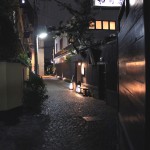
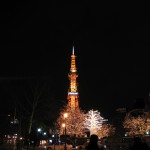
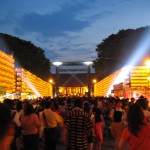
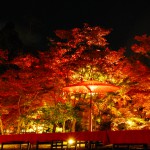
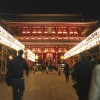
2022.11.4-5 Sachiko Segawa Surprisingly, this survey of the Sawara district marks the first time the Lighting Detectives have conducted an investigation within Chiba Prefecture. The team focused on an area designated both as an Important Preservation District for Groups of Traditional Buildings and as a Landscape Formation District. Here, the townscape of merchant houses, which flourished from the Edo period thanks to river transport on the Tone River, still remains. Located about 70 km from Tokyo Station and slightly inland from the Tone River, the Sawara district of Katori City once thrived as a merchant town, to the point it was said to rival Edo itself. However, the town declined during Japan’s period of rapid economic growth. Following a townscape survey in 1974, the value of its historic scenery was reappraised. Today, leveraging its convenient location—just two hours from Tokyo and one hour by train from Narita Airport—the area is being redeveloped as a tourist destination. For this survey, the team limited their scope to the townscape along the Ono River and conducted a nightscape survey. ■Uniquely Designed Lighting Fixtures From JR Narita Line Sawara Station, as we walked toward the Ono River, we were greeted by a bollard topped with a monkey. “Why a monkey…?” we wondered, but as we continued upstream along the river, we encountered bollards adorned with all sorts of figures: rabbits, carp, children, frogs, Ebisu, and more—each one different, with no two alike. These uniquely…
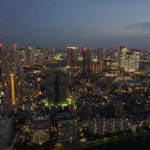
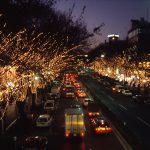
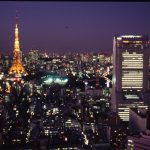
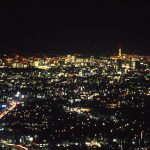
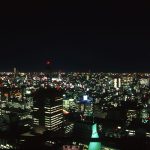
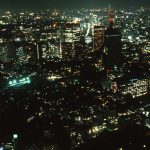
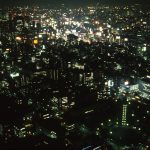
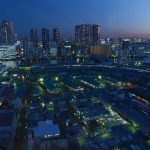
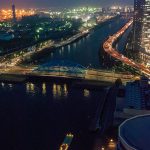
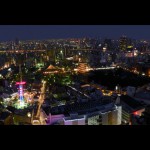
Taking a drive along the Tokyo Metropolitan Expressway is a great experience in the sequence of Tokyo light. In one drive you can catch glimpses of Tokyo Tower in between buildings, awe at the endless Ginza neon signage, and hide in the dark shadows surrounding the emperor’s palace and Tokyo Bay. Close up lights zoom by, but in the distance light is scattered everywhere, creating a complex sequence of overlapping elements. Such a variety of light exists in Tokyo! Rainbow Bridge and Tokyo Tower, Dual Features of the Tokyo Night (Ariake JCT~Shibaura JCT) At night the Rainbow bridge is a bridge of light connecting the Bayshore Route and Tokyo mainland. As we drove across the bridge, the Tokyo Tower that seemed to twinkling in the far distance became a dominating presence. However, all of the distance lights of Tokyo were swallowed by the cluster of buildings waiting for us on the Shibaura side of the bridge. The Lights of the Tokyo Nightscape (Ohi JCT ~ Shibaura JCT) Working from Haneda towards the center of Tokyo, among the rough and tumble lighting for warehouses and factories, is warm light spilling from offices and condominiums. The expressway takes a dive under the Tokyo Monorail for a real peak at Tokyo-style building light and luminous signage. The Expressway in the Ginza Sky (Tokyo Expressway) The Tokyo Expressway is elevated in midair as it cuts through Ginza. Officially, it is not part of the…
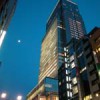
In the heart of Tokyo, Nihonbashi River lies hidden under a system of highway overpasses and the Sumida River is wide and commanding and it cuts through the city. With a variety of bridges, both rivers assert their own unique presence in the Tokyo cityscape. On our own river tour, we encountered the particular water and lightscapes surrounding the bridges and shores of each river. The newly built Nihonbashi Mitsui Tower next to the famous Nihonbashi Bridge. This is the first skyscraper in the Nihonbashi area and as the sun sets, the facade detail is elegantly illuminated. At the historical Nihonbashi District, a variety of lighting methods are on parade, but the highway overpasses keep most of the river hidden from view. Rumors of reconstructing the highway system underground would help revive the scenery along the Nihonbashi River. The main structure of the Chuo-Ohbashi Bridge is beautifully illuminated. The many bridges along the Sumida River compete with each other for top beauty marks, as each is illuminated in a multitude of colors.
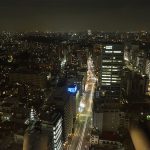
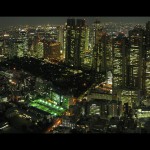
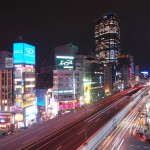
Under a rush of redevelopment, this is a huge period of transition for the area surrounding Shinjuku. On this survey, we were met by soft light filtering out of tall skyscraper windows, brilliant signage on facades and rooftops, and crowds of people along the streets and alleyways. Shinjuku Station South Entrance is in the middle of a redevelopment project scheduled to be complete in 5 years. A multitude of fluorescent lights line the pedestrian walkways with such an intense brightness that the surrounding scene is almost invisible. Six o`clock in the morning and waiting for the sun to come up on Yasukuni Street. Calm is finally starting to settle over Kabukicho, but still brightly lit signage are but glaring reminders of the nightlife. Brilliant advertising and signage along Yasukuni Street acts as an entrance gate to Kabukicyou. The bight lights entice many, who are aimlessly swallowed up by Kabukicho.
2023.01.26-01.29 Masafumi Yamamoto + Yuki Ito Okinawa is a place where diverse cultures and histories are intertwined. In Okinawa, each region has its own unique streetscape, and this is due to the fact that each region has a completely different historical background. The following is a simplified explanation of the historical background of each area. The Naha area was severely damaged in the war and was rebuilt; the Koza area was influenced by the U.S. military base and retains a strong American culture; and the Bise and Imadomari areas retain the traditional streets of the Ryukyu Islands. By comparing the light environment of each area, this survey sought to determine what kind of lifestyle culture and light features each area has, and what kind of light is unique to Okinawa. ■Sakae-machi MarketSakae-machi Market, located in Naha City, is a shopping street that was established during the postwar reconstruction period and has remained almost unchanged since then. Today, the market is a lively place where locals gather during the daytime, but at night it transforms into a more local haunt, drinking district that is quite different from the impression it gives during the daytime. The only light at night is from the taverns and the faint fluorescent lights in the upper part of the shopping street. (Floor illumination: approx. 20 lx) The illuminance alone gives the impression of dimness, but the actual atmosphere was not as dark as the impression given by…