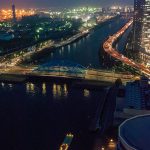
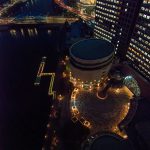
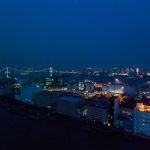
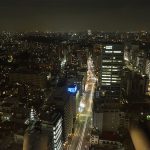
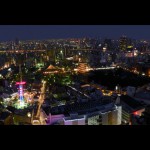
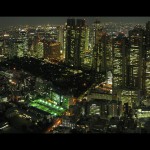
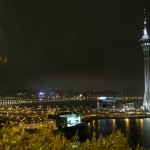
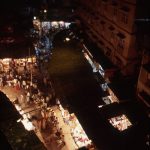
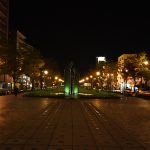
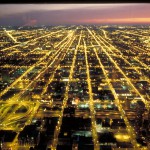
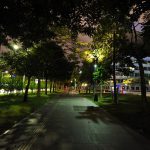
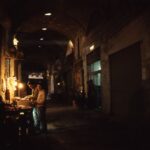
2024.05.16 – 05.19 Mari Kubota+ Noriko Higashi Busan, South Korea’s second-largest city, is one of the world’s major port cities. In recent years, it has also gained fame as a hub for tourism and film. We surveyed the lighting in Busan, which is also a member of LUCI (Lighting Urban Community International). South Korea is a close neighbor, just 1.5 hours from Tokyo by plane, making it a popular destination for quick and affordable trips. Busan, the second-largest city in South Korea, is not only a tourist destination but also a major port and an entertainment center, hosting film festivals. As a member of LUCI, Busan has been focusing on urban lighting as part of its urban planning. In 2015, the city developed an extensive overview of its nightscapes, resulting in the Busan Urban Light Policy for 2030. This policy has been updated several times, reflecting the city’s ongoing efforts in implementation and improvement. The guidelines divide Busan into several zones, each with lighting tailored to its specific characteristics.We traveled to Busan to assess whether the city’s lighting contributes to safety, beauty, attractiveness, and the local economy at night. ■Jagalchi Market Jagalchi Market is South Korea’s largest seafood market, selling both fresh and dried fish. After purchasing seafood on the first floor, visitors can have it cooked and served on the second floor. The market attracts many tourists. White lights are used to illuminate the seafood, making it look as…
Modern Kagurazaka still conveys the atmosphere of its once flourishing Edo Era streets. Old Japanese restaurants and bars line the narrow alleyways and with softly glowing lantern light and welcome signs to complete the scene, one forgets that this is Shinjuku Ward in the middle of Tokyo. In this historical neighborhood warm lantern light is all but a natural presence. Compared to the white lights of Ikebukuro and Shinjuku glowing brightly in the distance, Kagurazaka is submerged in darkness. Buildings in Kagurazaka are lower and lower color-temperature light also peaks out from the many alleyways. Kagurazaka Street, running down the center of this neighborhood, is the only really bright spot, except for the lights reflecting off the canal along Sotobori Street. A prized neighborhood for shopping and entertainment during the Edo period, the historical Kagurazaka Shopping Street is a 700 meter long living time slip. New and old shops are jumbled together along the street with specially designed, lantern-like street lights placed at intervals along the edge of the sidewalk. From Kaguraza`s main street several narrow alleyways lead to the interior of the neighborhood where the scale of lighting is downsized to human proportions. Outside restaurants on Hyogo Yokocyo, one of the more famous back streets, softly glowing lanterns light the entrance and also reflect of the cobbled street and traditional-style fence for a very old Japanese atmosphere.
A city for the young and young at heart, Shibuya. The area is composed of a mess of streets all with a different atmosphere, including a few main streets connected by narrower alleyways. Each street has developed its own personality and role, including lighting conditions to create the Shibuya night. From the scramble intersection in front of Shibuya Station, 3 distinctive roads, Dogenzaka, Center Gai, and Koen Dori radiate. After dusk, the lights come on and the personality of each street is even more clearly defined. As the title implies, Center Gai is the center of Shibuya geographically and caters to the young as the center for shopping and entertainment. This street is full of light. Each shop seems to be competing for the brightest facade with infinite amounts of luminous signage and advertising, creating a 3-dimensional playground. Dogenzaka is a festive street with a steady flow of pedestrians, but turn down one of the narrow side streets and the atmosphere changes immensely. The facades of many love hotels packed into the area are saturated with color creating a seedy blend of light and young couples prowling the Maruyama-cho area.
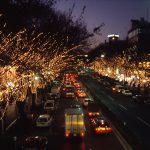
Taking a drive along the Tokyo Metropolitan Expressway is a great experience in the sequence of Tokyo light. In one drive you can catch glimpses of Tokyo Tower in between buildings, awe at the endless Ginza neon signage, and hide in the dark shadows surrounding the emperor’s palace and Tokyo Bay. Close up lights zoom by, but in the distance light is scattered everywhere, creating a complex sequence of overlapping elements. Such a variety of light exists in Tokyo! Rainbow Bridge and Tokyo Tower, Dual Features of the Tokyo Night (Ariake JCT~Shibaura JCT) At night the Rainbow bridge is a bridge of light connecting the Bayshore Route and Tokyo mainland. As we drove across the bridge, the Tokyo Tower that seemed to twinkling in the far distance became a dominating presence. However, all of the distance lights of Tokyo were swallowed by the cluster of buildings waiting for us on the Shibaura side of the bridge. The Lights of the Tokyo Nightscape (Ohi JCT ~ Shibaura JCT) Working from Haneda towards the center of Tokyo, among the rough and tumble lighting for warehouses and factories, is warm light spilling from offices and condominiums. The expressway takes a dive under the Tokyo Monorail for a real peak at Tokyo-style building light and luminous signage. The Expressway in the Ginza Sky (Tokyo Expressway) The Tokyo Expressway is elevated in midair as it cuts through Ginza. Officially, it is not part of the…
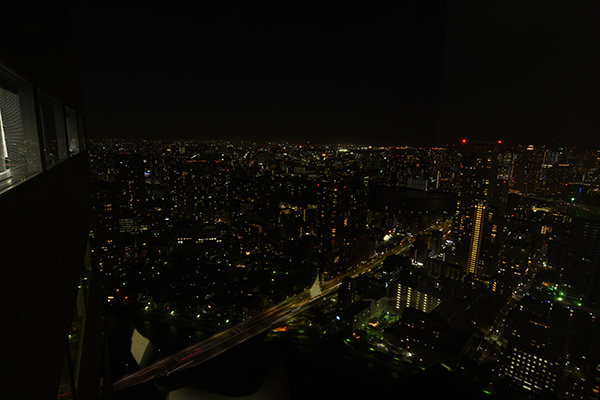
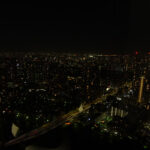
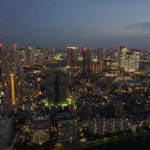
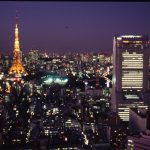
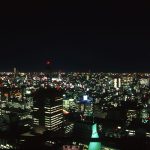
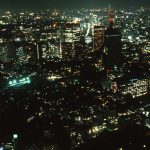
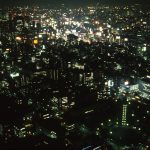
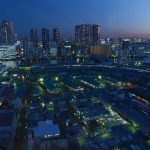
From up above Tokyo looks like an overturn jewelry box, the night streets glitter with lights and it a fairly beautiful sight. Once back on ground, the glitter has turned harsh. It is an economically advanced nightscape, an efficient nightscape with needless light and light pollution. An aerial view of Tokyo at night. The dark area in the center of Tokyo, the Emperor`s Palace, is surrounded by clusters of lights that resemble precious stones. From this view it is unclear where Tokyo begins or ends. The Tokyo nightscape is illuminated in bright white light. Mercury lamps and florescent lights in the background of Tokyo Tower control the nightscape of this city. Old-fashioned houseboats gather in the foreground of the Odaiba District and the Rainbow Bridge.