Light Up NINJA

5th Light Up Ninja@Singapore

More

Duxton Plain Park, Singapore 19 & 20 November 2005 Go, Go Ninjas!! Light Up Ninja Logo The Light Up Ninjas have a long history with the Lighting Detectives. The purpose of the original event was to sneak around illuminating the ordinary and everyday “street corner” and then sneak away without being detected. This one-night event’s original title was “Light Up Guerillas,” but because of unstable political conditions in southeast Asia “guerilla” was no longer an appropriate title. While the principal remains the same the name has been changed to the Light Up Ninjas. The Tokyo and Singapore Chapter collaborated to brainstorm for a new name. Singapore`s Yah Li suggested “Light Up Ronin,” a wander on a quest for the purpose of life, or light in this case. A very fitting title, but the word ronin does not have the same ring in Japanese. The word ronin means a student who failed to get accepted to a university of his or her choice and is seeking another chance. Or from a more historical point of view, a masterless samurai! The final naming came from an American Tokyo member, Rachel Nakyama, who suggested “Light Up Ninja” for their deftness and indefectibility, also a word that most people around the world can relate to. Singapore Design Festival For Singapore’s first Design Festival the Lighting Detectives were invited to participate with an even of their own. There was a lot of discussion about event…

City Walks and Salon

“Akihabara” Walking Tour / Lighting Survey – Nagasaki, Yokohama, Dallas, Fort Worth, plus more…

More

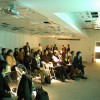
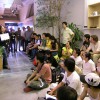
17 November, 2005 This month the Lighting Detectives rallied at the new Endo Lighting Corp. Aoyama Showroom for a bigger and better version of the regular salon session. The showroom accommodated 60+ detectives, a 3-screen slide show, and energy and enthusiasm to keep the discussion going for more than 2 hours. It was a more “formal” setting than our usual meetings and guests needing coaxing to sit in the front row, but all eyes and hears were on the presenters and their slides once the lights were dimmed. The agenda for the night gave the detectives a rare opportunity to compare and contrast the Japan bay cities of Nagasaki and Yokohama, watch footage from the Bali Kite Festival, and view in detail two monsters in the architecture world: Louis Kahn’s Kimbell Art Museum and Tadao Ando’s Modern Art Museum of Fort Worth. To top the night off, the detectives were able to seek a peak at Endo Lighting products on display. The detective’s did not go home unsatisfied tonight! Reported News, Surveys, and Events Nagasaki City Lighting Survey…..Rachel Nakayama Yokohama City Lighting Survey…..Tsutomu Nagatsu Dallas / Fort Worth Lighting Survey…..Yosuke Hiraiwa City Walk: Akihabara…..Momoko Muraoka Light Up Ninja@Bali…..Ken Okamoto & Natsuko Ueda 2005 Transtantional TN Form in NYC…..Saiko Tanuma

City Walks and Salon

Akihabara: Change and Progress in Electric Town

More

9 November 2005 Akihabara, home of the latest and greatest in electronic technology, is not just a place for the “otaku” any more. While the “super-nerds” scour the electronic stores for the newest gadget, urban redevelopment is re-shaping this area, trying to combine the old Akihabara with a fashionable new version. The Lighting Detectives setout this time to discover the possible direction of Akihabara`s future. Akihabara Redevelopment The detectives gathered at the entrance to the infamous Electric Town to start off on their Akihabara Adventure. Redevelopment to make Akihabara a worldwide center for the IT community is part of the concept behind Akihabara Crossroads, a new development officially awaiting its grand opening in the spring of 2006. However, one of two high-rise structures in this redevelopment, Akihabara Daibiru Building, a combination office, IT academic research, and convention center, opened its doors in the spring of 2005. From the inside wall washers gently illuminate the Daibiru Building facade and blue LED accent lighting, embedded in the entrance pavement, creates a lighting environment that is a far cry from the typical Akihabara experience up until now. Along with this new lighting environment, the opening of the Tsukuba Express and a temporary museum D-Akihabara, we caught a faint glimpse of the new Akihabara. The Yamanote Train Line platform is almost level with the second floor of the Daibiru Building, just in front of the train station. As the trains pass in and out…

Global Research

KOBE

More

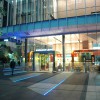
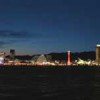
Kobe, very similar to the port town of Yokohama, is full of great spaces for pedestrians, including, the main strip, Flower Road, many arcades, underground passages, and the Kobe Meriken Park. While most of the lights in this area are white mercury lamps, Kobe Port Tower glows a brilliant orange. Looking from Port Island across the bay towards the Kobe waterfront, Meriken Park and Harbor Park, both places of escape for Kobe residents, are clearly visible. Another great way to enjoy this view is to hop on one of the many night cruises for a tour of Kobe Bay. The stage for the Hanshin Tiger’s victory parade, Sannomiya Station and Flower Road in downtown Kobe, a very a pedestrian friendly area with wide sidewalks for pleasant strolling. From the Rokko Mt. observation deck, one cannot only view the lights of Kobe, but also its neighbor, Osaka, and on a really clear day, the Akashi Strait. Maya Mt. observation deck on the next ridge over, is a local spot, but also an incredible view of the Kobe nightscape.

Global Research

DALLAS・FORT WORTH

More

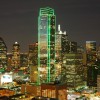
Dallas, the stage for the assassination of President Kennedy and Fort Worth, a city of culture that attracts architects and designers from around the world. However, both cities have to compete under the hot Texas sun, with most buildings fitted with walls of heat reflective glass. This building style leaves only the edge of buildings for accent lighting, which often reflects onto nearby buildings. From Reunion Tower, looking towards the glass skyscrapers in the west end of downtown Dallas. Strong accent light for other buildings is seen reflected in the facade. The interior of Louise Kahn’s Kimbell Art Museum, where his words “Light is the Theme” still echo. Natural light filters in through a slit opened at the top of the vault and reflects off of reflectors fitted into the architecture. The reflected light turns the vaulted ceilings brilliant silver. The Modern Art Museum of Fort Worth designed by Tadao Ando and completed in 2002. The main walls seen from the outside are lightly wall washed without intruding on the art pieces and exhibition space. The outer perimeter of the building reflects clear design intent in the careful composition of high-quality light. In the evening, reflections on the surface of the surrounding pond present another angle to this building.

Light Up NINJA

Light Up Ninja@Bali

More

Bali, Indonesia 25 & 26 August 2005 The Lighting Detectives in Bali? The Lighting Detectives traveled to Bali this summer for two reasons: 1. To join in the fun of the famous Bali Kite Festival and show off our luminous kites and 2. To witness the powerful Ketcha Dance and add our own lighting element to the dancer’s costumes. The Lighting Detectives have done the lightup guerrilla “illuminate and run” scheme in Japan, but this was a first to bring the event overseas and also coordinate activities with the locals. There was no running and hiding this time!! LIGHTING UP THE WIND Once an evening in Bali brought a constant humming from the sky – with the cacophony of frogs and crickets. Mesmerized. Alluring. This sound actually came from the hummers that are attached to giant Balinese kites. This memory stayed fresh. As ideas for the workshop of Lighting Detectives came in for 2005, we thought to illuminate this Balinese experience. Though invisible, the wind makes its presence on everything it touches. The kite is man’s way of the wind’s revelations. Illuminating this rhythm against the black hue of the Balinese night sky should be enchanting, magical. The main kite was flown in Sidakaria, home of the champion kite team in Bali. It was similar to the Balinese traditional kite, the Janggan (dragon). 40 x 50 feet, with a 300 feet long tail. Light sources adorned the tail. Kites made…

City Walks and Salon

“Ginza” Walking Tour, NYC Light Fair Survey Reports

More

28 July, 2005 At this session there were only a few topics on the table, which gave members an opportunity to discuss, in-depth, new products and ideas from the New York City Lighting Fair, the direction of and trends in Ginza lighting, and the festive events that unfolded at the most recent Candle Night Performance. This session was a welcomed breather from previous salons of fast-paced slideshows and long agendas. Members could freely exchange ideas and talk about lighting culture without a pressing schedule. Reported News, Surveys, and Events NYC Light Fair and Survey…..Akiko Okunaka City Walk: Ginza…..Ueda Natsuko Candle Night Summer Solstice 2005…..Saiko Tanuma

Global Research

YOKOHAMA

More

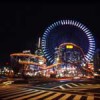
Compared to many cities, Yokohama is a relatively open city. Even with large high-raise buildings close-by you don’t feel enclosed and the added factor of a waterfront can help make anyone feel refreshed. The continually changing point of view from the Cosmos World Ferris wheel is a great way to observe the city. The Landmark Tower is often thought of as the symbol of Yokohama, but the Cosmos World Ferris Wheel could be the runner-up. In the dark night sky the Ferris wheel draws a perfectly beautiful circle of transparent layers of light, adding a deep appeal to the Yokohama nightscape. Looking south from the top of the Yokohama Cosmos World Ferris wheel. The illuminated Red Brick Warehouse expresses its self beautifully as it blends with the surroundings area and the blue twilight settling in on the Yokohama Bay. Ohsanbashi Pier and Yamashita Wharf complete the background. Looking from the vicinity of Yokohama Customs towards the Landmark Tower. In this newly developed area space is comparatively open. With only a few high-raise buildings, and reflection on the water the city seems bigger than it really is.

Global Research

NAGASAKI

More

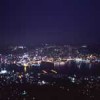
Nagasaki is said to be a melting pot of cultures and people, this also describes its city lighting plan. The city is rainbow colored, with streetlights illuminating white light one moment, orange the next, and green the next from all different types of poles and light fixtures. Lighting is predominantly for street surfaces, but another feature of the Nagasaki nightscape is the illumination of many historical buildings including churches, bridges, and the old trading post. Formed in the hills sloping towards Nagasaki bay, the City of Nagasaki as seen from Mt. Inasa. The faint lights dotting the hills are the many lanterns along the numerous stairways and slopes leading up the hillside. A hot nightspot along Nagasaki bay, Nagasaki Dejima Wharf attracts many after hour visitors looking for a late dinner or drink. The cool breeze from the bay and warm light from the many outdoor restaurants provide a relaxing atmosphere on hot summer nights. The network of cars, streetcars, and pedestrians connect at the busy intersection of Tsukimachi Avenue and Kanko Avenue in downtown Nagasaki. But, as the shops close and the city shutsdown for the night, streetlights specific for road surfaces are the main light source remaining.

City Walks and Salon

Ginza: A New Trend in Lighting

More

12 July 2005 The best part about the Ginza Distirct is that it is mirror of present times and its trends. And just by looking at boutiques such as, Chanel, Louise Vitton, or Christian Dior, one can see that a catchy facade is the latest architectural trend. But is that all Ginza lighting is about? The Lighting Detectives wanted to find out more about the lighting environment of this trendy, but illusive commercial district in the middle of Tokyo. We split up in to 4 groups to cover five of the main streets: Ginza Avenue, Harumi Avenue, Namiki Street, Miyuki Street, and Hanatsubaki Street. Ginza Avenue While in Ginza, you can’t miss Ginza Avenue, one of the main streets of Ginza with an ever-changing face and home to fashion boutiques such as Chanel, Cartier, Louis Vuitton, and Opaque. The design of each boutique is sensitive to the finicky Japanese market, while trying to create a store facade that screams its own identity in this competitive era. This street is one of the busiest in the district, as shoppers are attracted to the eye-catching facade designs and on Sunday, when it is turned into a pedestrian mall. Compared to other streets in the district, we noticed that the pavement is a lighter gray and the asphalt used is of a lighter tone. Roadway reflection properties are lower along this street even though sufficient luminous levels have been secured. Harumi Avenue Harumi…

Candle Night

Candle Night Summer Solstice 2005: Omotesando Debut!

More

19 June 2005 “Turn off the lights and take it slow.” The time to turn off the lights and relax by candle night was once again upon us as the Lighting Detectives and Musashi Art University students collaborated with local elementary school students to celebrate another Candle Night on the 2005 summer solstice. Up until now the local event was limited to Harajuku`s Cat Street, but this year we have widen the venue and pulled the June 19th event out into the open of Omotesando. Started by an environmental NPO, this nation-wide event is a slow, relaxing time to reflect on human nature and rethink our positions on the environment, energy conservation, and the modern lifestyle. More then 20,000 venues all over the country participate in this “lighting down” event with 300 of those venues also displaying candle installations. With each biannual celebration the circle of light continues to grow. Children’s Lantern Parade Along with their parents, 50 or so children from the local Jingumae Elementary School and the local Omotesando trash detail crew, Green Bird, started off from the school on a lantern parade that would take them to a rendezvous point at the new Cartier Store construction site and then down to the Oriental Bazaar. Roman candle-shaped lanterns, made by the children, were first carried to the rendezvous point where the Chief of the Lighting Detectives, Kaoru Mende was waiting. The Roman candle lanterns were exchanged for shopping…

Global Research

NEW YORK 2005

More

Manhattan is a sleepless city of luminous spectacles, a city everyone dreamed of in the 20th century could have imagined. The energy of the people is transformed into the bright lights of the nightscape, as lights dot the skyscrapers all day and night. The beauty nightscape at New York City is best seen in its skyline from across the river. Looking down on Manhattan from the Empire State Building at dusk. The Streets and Avenues present a rock-solid, ridged foundation. The RCA Building glows a bright white, Fifth Avenue is a yellowish-gold, and the point of the Chrysler building can be seen. Walls of light surround Times Square with the latest technology incorporated into the different interactive lights. The Empire State Building, a well-established icon in the Manhattan skyline with a 360°view from the top.

City Walks and Salon

“Imperial Palace” Walking Tour, Fukuoka and Sapporo City Lighting Survey Reports, Alaska Aurora Borealis Report, plus more…

More

5 April, 2005 A large crowd of club members, from students to lighting professionals, gathered this evening to listen to and contribute to reports from the city walking tour team and their trek around the Emperor’s, reports on city lighting surveys in Sapporo and Fukuoka, exciting photograph and stories from a trip to see Alaskan Northern Lights, and a colorful display from lighting manufacture, Maxray. Imperial Palace Walking Tour The first report came from the city walking tour team and their 5km trek on March 25 around the Emperor’s Palace in the middle of Tokyo. The members gathered for the tour were further broken into two teams and the route was surveyed in two parts. Blue team members, Ken Okamoto and Yuki Ogawa, both presented digital pictures for the audience to see for themselves the contrast in lightness and darkness along the perimeter of the palace grounds from Yasukuni Shrine to Tokyo Station via Takebashi Bridge. Yellow team members, Aki Hayakawa and Rachel Nakayama, contributed their impressions of the tour on the opposite side of the palace with pictures including the moonlit moat and illumination of the Japan Budokan, Diet Building, and Tokyo Tower. Alaskan Aurora Borealis Club members Natsuko Ueda and Teruhiko Kubota stole the show with breathtaking slides of the Alaskan Northern Lights. The whispery green lights danced across the projection screen and into the hearts of the gathered club members as they relayed their accounts of waiting…

City Walks and Salon

Imperial Palace: The Last Refuge of Darkness in Tokyo

More

25 March 2005 With a full moon to guide us, 20 lighting detectives gathered at Kudashita Station on this early spring evening to walk around the Emperor’s Palace in search of any darkness left behind in the glaring commercialism of Tokyo. We all first trooped to Yasukuni Shrine to view the illumination of the big orange gate and from there broke off into 2 teams moving in opposite directions around the palace. The blue team worked their way towards Ohte-Machi, while the yellow team moved steadily towards the Kasumigaseki District, with the final destination the Wadakura Fountain in front of Tokyo Station. The first stop for the blue team, led by Chief of the Lighting Detectives, Kaoru Mende, was Chidorigafuchi, a famous cherry blossom viewing spot in Tokyo. But, unfortunately we were early in the season and only the portable light fixtures for night viewing were on display. As the team made their way towards Tokyo Station, the buildings along the perimeter seemed to have toned-down their lighting effects, as not to intrude on the privacy of their neighbors across the black moat. But on the homerun stretch towards Tokyo station, the recently redeveloped Marunouchi District stood in great contrast to the dark palace. One could stand in the same spot and view Marunouchi as one would think of Tokyo, with tall buildings and fantastic lights, and then turn on the same spot and face the dark moat, trees, and…

Global Research

FUKUOKA

More

While the streetscape and lighting environment are very individualistic, an overall unity exists throughout Fukuoka. Throughout the city, a skilled balance between lighting for public and private areas is implemented. The lighting in the underground shopping center of Tenjin is composed of intense incandescent lamps, creating a unique atmosphere of warm light for shoppers. The neon lights of the Nakasu District reflect in the Naka River creating a dramatic perspective image of the streetscape. The street vendors are a place for people to relax and a trap for tourists, but they also create a unique nightscape in the city.

Annual Forum

3th Annual TN Forum: 2004 / Hamburg Lighting for Daily Transportation Facilities

More

Date: September, 2004 Program: City Tour, Symposium Venue: Freie Akademie der Kunste It was the beginnings of autumn in the beautiful port city of Hamburg, where the forum was held this year. The dome-shaped hall, Freie Akademie der Kunste, conveniently location near Central Station, was illuminated by soft light creating a pleasant atmosphere for all present. Hamburg, located in northern Germany, with easy access to and from Scandinavia made it possible for participants from Copenhagen to also join in the fun. The forum, continuing from last year, was again, well attended with about 150 persons registered. This year was also a little different with a pianist performing in between sessions. The theme this year was “Daily Transportation Facilities”, meaning public transportation used everyday to get to and from school and work. The core members from six different countries reported on what kind public transportation was used in their area and the lighting environment of these facilities. Kaoru Mende presented details and pictures of how Tokyoites endure the grinding morning rush day in and day out. Pictures of squeezing more people into an already packed train got a good roar from the crowd. Also, scenes from around main stations, such as Tokyo and Shinjuku, lined with shops and billboards, relayed how stations in Japan are closely tied with commercialism. The white, unified atmosphere created by long 110W fluorescent lights covering many ceiling is definitely a characteristic of Japan. Recently, architects and…

Candle Night

Candle Night Winter Solstice 2004 @ Cat Street

More

21 December 2004 Candle Night Performance “Turn off the Lights and Take it Slow.” This is the continuous theme for the Candle Night Event, now in its third season along Harajuku`s Cat Street. This event uses the earth’s natural “clock” the longest day of the year, the summer solstice, and the shortest day of the year, the winter solstice, to help bring awareness to the natural flow of time. For the event, our hope was to turnout all the streetlights along Cat Street, to create a dark background for the candle installations. The city was unable to respond to this request, but shops along the street were cooperative and we succeeded in creating a darkened atmosphere for the event. A total of 11 installations were set up along the street. Most were student projects that have began to incorporated messages and other exciting tricks into their candle works. Some fun performances included a big “CHEERS!” with a candle beer glass and illuminated one-yen coin chains symbolizing the money spent on electricity. Creator Candle Design Exhibition The Creator Candle Design Exhibition was a new event added to this winter solstice performance. Ten designers designed candles to be displayed at the exhibit. Naoto Fukazawa and Takashi Sato are just a couple of designers who willing donated their time and work to the exhibit. Even though all who participated were professional designers, candle design was a first. Designing a candle is not just…

City Walks and Salon

City Walk “Tokyo Helicopter Tour” / Lighting Survey – Athens & Santorini, Osaka, Nagoya

More

15 December 2004 The December Salon started off hot, with a post-Summer Olympic lighting survey report from Greece and pictures from the recent “City Flight Tour” over Tokyo. It was show time for the detectives as fantastic slide after slide revealed cloudless blue skies over the deep blue ocean of Santorini Island, incredible sunsets on the Mediterranean waters, and the quaint historic streets of Athens. We then moved on to pictures taken from a recent helicopter tour over Tokyo. Numerous pictures confirmed the complexity of this megalopolis, but at the same time the distance revealed the simplicity of Tokyo, so calm and peaceful from the view of the cockpit. The detectives also started a new series of reports about city lighting in Japan. This session we heard from Osaka and Nagoya, but look for other Japanese city lighting reports at future Salons. Reported News, Surveys, and Events City Walk: Tokyo Helicopter Tour…Kentaro Tanaka Athens & Santorini, Greece Lighting Survey…Saiko Tanuma Osaka City Lighting Survey…Yosuke Hiraiwa Nagoya City Lighting Survey…Ken Okamoto

City Walks and Salon

Tokyo Helicopter Tour

More

15 December 2004 After a 10-minute bus ride from Shinkiba Station, the Lighting Detectives found themselves at the Asahi Helicopter Heliport ready for a fantastic 8-minute flight over Tokyo. The small, 6-passenger helicopter would take us up 700 meters over Tokyo to view the nightscape along the “Night Tour: Ginza Course”, including a sweep starting at the Tokyo Heliport~Odaiba~Rainbow Bridge~Shinbashi~Ginza and lastly Tokyo Station. At \8000 per person it was a glamorous “city walk” to remember for the Lighting Detective club members. We broke up into 3 groups to board the helicopter, each team equipped with a digital camera, video camera, or still-photo camera. We were prepared to capture the nightscape in any and all forms. The sound of spinning propellers over head greeted our arrival on the launch pad. My team climbed in, fastened seat belts, put on headphones, and then we slowly began to rise off the ground. The first view after take-off was of the Tokyo Bay and Odaiba. Numerous taillights along the Bay Shore Route formed a strip of winding light and the illuminated Rainbow Bridge support columns stood out against the black bay. After viewing Odaiba, we headed into Tokyo; we could see the newly redeveloped Sio-Site, Tokyo Tower, and the illuminated Roppongi Hill’s Mori Tower in the distance. From this viewpoint we could see the composition of lights spread across the Tokyo skyline, white office lights, orange lights along the main arterial roads, and…

City Walks and Salon

City Walk “Sumida River Waterbus Tour” / Lighting Survey – Mumbai, Korea

More

6 August 2004 This month’s Salon included a variety of reports from members who traveled to places off the beaten track, globally and in our very own Tokyo, to survey, but of course lighting. The less glamorous countries and forgotten views of Tokyo help to give us, lighting designers and enthusiasts, fresh perspectives on everyday lighting and foreign lifestyles. Mumbai, Jejudo, Busan, and the Sumida River are place you might just vaguely recognize, but Lighting Detective members shared their stories and adventures of what they found and learned in these lesser-known, but equally interesting places. Reported News, Surveys, and Events City Walk: Sumida River Waterbus Tour + Asakusa…Natsuko Ueda Mumbai, India Lighting Survey…Kentaro Tanaka Korea 3 City Tour Lighting Survey…Aki Hayakawa Candle Night Summer 2004 Performance…Saiko Tanuma