


照明デザイナー Archives

Vol.054 – Understanding Millennials
Theme: Understanding Millennials Interviewer: Clement Lee Mende: This is a very interesting topic for me, because communicating with younger generations is a little headache to me. I have been teaching Lighting Design for 10 years in universities, where I also come across so many different thinking styles and working approaches. Clement: The reason I ask this question is to learn how your generation feels about the younger people. I would like to share our views so that we could realign ourselves to create more awareness and understanding between different age groups. Mende: Your generation is the most interesting generation so far. I feel that Millennials prefer to be left alone and secretive. My generation, on the other hand, loves to share and communicate verbally even if we don’t understand each other. Clement: Millennials do prefer quiet time sometimes as we believe certain information can be sourced online, but we value knowing how other people think about topics. Luckily for me, I was born in the beginning of the 90s before technology bloomed to enhance life and most people were still getting used to this new luxury. Mende: I feel sometimes that Millennials tend to communicate better via digital devices rather than verbal unlike us. Do you think sometimes an old guy like me gets noisy? Clement: No! I do find your generation very interesting. Having caught in between post-tech and pre-tech, I am always wondering what it is like to…

Vol.053 – Self-Promotion as a Designer
Theme:Self-Promotion as a Designer Interviewer: Yuichi Anzai Anzai:Today I`d like to talk about something that is troubling me as a designer with not a lot of experience. I`d like to talk about self-promotion, something that I am lacking in. When I was an exchange student in NYC we had many opportunities to present our ideas in class or while job hunting, but each time I failed miserably at presenting an appealing picture of myself. There were language barriers, but I think it was more a fundamental lack of composer and confidence and an inability to communicate about myself or dictate to the audience. I think, as a designer, the ability to promote oneself is necessary to persuade clients about new projects and to strengthen trust while working together. Mr. Mende, when you were new to the profession or just starting to build up LPA did you have any specific troubles or points of strength? Mende:I`m not one for a showy sales pitch, but I wanted to do good work on good projects. At my previous job I was able to meet and work with several architects, so I had a good base to work with when I started LPA. Just being oneself is ideal for self-promotion. As a designer, getting good feedback and reviews from the public is not because one has a showy sales pitch, but it reflects good results which speak for themselves. Good results, does not only…

14th Transnational Lighting Detectives Forum in Santiago, Chile
14th Transnational Lighting Detectives Forum in Santiago, Chile 2018/10/17 Noriko Higashi Taken at the venue for talk event, National Museum of Fine Arts, Santiago The 14th Annual Transnational Lighting Detective Forum was a 2-day event held on October 18th and 19th in Santiago, Chile. As the first forum to be held in South America, the event was well attended by the general public, with professional lighting designers and architects, instead of the usual student population, making up the central body. The forum kicked off with a relay-style talk session by the core members, focusing on the forum theme, “Hero and Villains of Light in your City,” at the Chile National Museum of Fine Arts. The forum wrapped up with proposals to improve the lighting environment of Santiago at the University of Chile. Day 1:Oct. 18th(THU) ■Relay Talk “Hero and Villain of My City”@ Museum of Contemporary Art Core members kicked off with a talk session focused on the forum theme, “Hero and Villains of Light in your City,” reporting on the state of New York City, Beijing, Hamburg, Stockholm, Belgrade, Singapore, and Bangkok. Each presenter had only seven minutes to describe the challenges and successes facing each city. ■Night Walk Participants were divided into groups and walked around the five distinctive areas in Santiago to look for heroes and villains of light. Each group experienced difficulty finding heroes of light. ◇Team A:SANTA LUCIA Our group’s staring point for the survey…

Newsletter vol.97
Date of Issue:March 19, 2019 ・Activity 1/Belgrade of Light 2019 (2019/02/04-02/09) ・Activity 2/World Lighting Journey 2018 Retrospective: An Interview with the Chief Mende(2019/02/18) Belgrade of Light 2019 2019/02/04-02/09 | Aleksandra Stratimirovic Belgrade of Light event, organised by Belgrade Lighting Detectives, opened a new decade of activities with programme Imagine Light during the period 4th to 9th of February at KC GRAD (Belgrade, Serbia). ■Lighitng Detectives Belgrade Chapter Belgrade of Light 2019 was held for 6 days at KC GRAD. Five artists, art groups and collectives, with their dynamic performances, installations and exhibitions played with motion, light and sound, transforming gallery at KC GRAD, into entirely different experience every night during the event. THE BOX | Q / TI / JA by Radio.Nica ■Day 1:THE BOX | Q/TI/JA Spectacular performance by Radio.Nica – [THE BOX | Q / TI / JA] opened Belgrade of Light 2019. The performance was inspired with “The Ray of the Microcosm” by Petar II Petrovic Njegos, and with the help of the graphoscopic alchemy, lasers, crystals and other analog sources of light, Radio.Nica was creating pure magic on the stage. Radio.Nica is a flexible and ever-changing group of artists with different backgrounds (theater directors, designers, dramaturges, performers, circus artists etc.) experimenting with light design. LUMINESCENCE by Incredible Bob ■Day 2: LUMINESCENCE High quality, dense, Belgrade’s dark and Luminescence in it – a light installation by Incredible Bob. This darkness intercepted with light from various light sources,…

Vol.047 – Playback!
Theme:Playback! Interviewer: Bryan Yan This “coffee break” column is a bit different from all the previous ones. The change of style in this column is also corresponding to our interview topic – “Playback”! Since I have read the PAST issues, I decide to make some changes. Actually, the original topic is “Look back!”. After a discussion with Mr. Mende, “Playback” is more interesting. Playback – It’s straightforward. We are going to talk about the PAST. Everyone has their PAST. Some people are very afraid to look back and remember some bad memories. Bryan:Hello Mende-san! I’m long waiting to have a coffee break section with you today. People like you with a lot of achievements and experiences should have many things in the PAST that you would like to remember and look back. Taking this opportunity, I would like to listen to you because I love stories. Would you tell me which project you like the most in LPA’s thousand projects? Mende:Well, since I always try to enjoy and concentrate now and think about little bit near future, I am not good at remembering. However, if you ask me to choose, I would like to say it should be “Tokyo International Forum”. The reason is that it’s the first big scale project after LPA office was established. On the third day of establishment, we received a call from New York to invite LPA to be the lighting designer for this project. From…

Vol.046 – What is the definition in between of ‘Lighting designer’ and ‘Lighting planner’
Lighting designer’ VS ‘Lighting planner’ Interviewer: Karen Huang Karen: Mende san, today I would like to talk about the definition in between ‘Lighting designer’ and ‘Lighting planner’ since I thought about how we could define the direction or the ‘concept’ for the title of ‘lighting designer’. Just in my own opinion, the feeling of naming ‘designer’ and ‘planner’ are slightly different. Feels like ‘designer’ should pursue more creative and innovative ideas on design work, even though that is kind of challenging works. The other side, ‘planner’ feels like to support more accuracies of demand and standard regulation. If you could easily interpret that ‘designer’ may be more close to the art field and ‘planner’ shall be close to the engineering field. Of course, that is purely based on my own thinking. Our company name is ‘Lighting Planners Associates’. May I ask the reason why Mende san has chosen the ‘planner’ instead of ‘designer’? Mende: Well, do you feel the word ‘planner’ is strange? Haha~I still remembered it very clearly when I was considering the company name. At that moment, I asked Mr. Paul Marantz about the name ‘Lighting Planners Associates’ and got some feedback. He said ‘why you don’t call your company name to be ‘MENDE LIGHT’’? Actually, it was a very surprising feedback for me. I didn’t want to reflect my name on the company identity. But actually in the USA, it was not so common to use ‘designer’, but…

Melbourne
Global Nightscape survey in Melbourne 2014.11.11-11.15 Misuzu Nakamura+Haruka Sakoda For 4 years running, Melbourne has been chosen as the best place in the world to live. City planning has successfully focused on public space to build one of the world’s leading and charming cities. The cityscape is harmonious balance of old and new buildings. Main avenues lined with trees and lampposts are beautifully maintained, along with smaller alleyways, and even the waterfront along the river flowing through the middle of the city is carefully planned. We surveyed the Melbourne nightscape in search of the secret to its coziness. We can clearly feel the difference of lighting atmosphere between CBD area which is occupied with blacked-out buildings and surrounding local area which is covered by twinkling warm-colored street lights, when we look down from “Eureka Sky Deck”. The lighting plan of the city seems to have intent to differentiate business districts and cozy alleyways, using different color temperature as public lights. The waterfront area was well-maintained with designed pole lights and façade lighting from the surroundings, but some of tree lightings were by glaring spotlights. Many people were enjoying their walk along the river. We found a lot of “catenary downlights” in the city. Instead of pole lighting, catenaries covered large squares, wide intersections and narrow pathway between the building. When the night falls, the downlights looked like a starry sky. As we can see that so many people were gathering at…

Vol.042 – Lighting Design Awards
Theme:Lighting Design Awards Interviewer: Li Jinmu Jinmu:Mende San, today let us discuss about design awards. When I was in the college, I actively joined many student design competitions. During my final year in the University, I particularly got a chance to participate an urban design competition. Mende:Why were you interested in taking part in design competitions? Jinmu:As you may know I majored in landscape architecture. Through this competition, I was able to team up with other architecture and urban design students. That was something I had never experienced before. I would like to know other people’s thoughts throughout the entire process. Mende: Really? So, the purpose for you to join the competition is to know something? You didn’t intend to get any prize? Usually, people would like to win. Jinmu:I didn’t expect too much at that time. My school invited several top universities in the world to participate, such as University of Tokyo, University of Pennsylvania, thus I learned to take a better yearning attitude. Adding to the difficulty, Kazuyo Sejima from SANNA was in the Jury. She came to Singapore, and our group had to present to her and other judges. It was a very interesting experience for us, and surprisingly, we got the third prize at the end. Mende: I see. One of the function of the design award program is to encourage young people to challenge themselves. Jinmu:Perhaps this is also to get the motivation for my design…

Vol.039 – Light art and Lighting design
Theme: Light art and Lighting design Interviewer: Blanche Lam Blanche:LPA is a lighting design firm. The works mainly focuses on design rather than art. What do you think about design and art? Mende: Good question! But I’d like to ask you before my correct answer, Blanche. Blanche:I studied both art and design before. Art could be explained through personal emotion or convey the message to visitor/ audience. Each artwork has its own story. For design, depends on user or purpose or different situation to improve and change. How about you, what do you think about art or artist? Mende: Artist is a great career. I like art but I decided not to be an artist. Artists are more isolated spiritually. Recently, there are many people saying that designers should be much closer to artist and artist might learn many things from designer. But I don’t think so. We should be inspired by each other. However, artist doesn’t need to think about the neighborhood or others happiness. Just express their feeling or passion. But the designer always think somebody else happiness. Blanche: How about “lighting art”? Mende:I’m not familiar with this word “lighting art”, usually I would say light art. I know James Turrell and Olafur Eliasson, great artist who manipulate light as material. You cannot forget those two artists. I respect their works very much. Olafur Eliasson had an exhibition in London that is huge artificial sunlight. They cannot be compared with…

Vol.038 – Scope of Lighting Design
Theme: Scope of Lighting Design Interviewer: Sunyoung Hwang Sunyoung:Would like to have a talk with Mr. Mende regarding scope of our work, architectural lighting design. Sometimes it is hard to tell how much we should take care of the ‘other’ lighting that are not under our usual contractual scope but still affects architectural lighting. Mende:(While drawing a diagram) We take part of architectural lighting so do not hesitate to propose architectural design. Sometimes, there are overlaps between structure, mechanical engineering or even energy consumption calculation such as Greenmark. I am a little afraid that lighting design these days are becoming to be too technical. Also project mapping and media facade, I would say entertaining part for commercial advertisement and graphics for events.. Scope is always overlapping and regarding our contract to clients, it is difficult to say ‘no’ all the time for those areas. Sunyoung:That is right.. it is difficult to draw line sometimes. By the way, I prepared some visuals to share with you. These are pictures of event lighting for Christmas and Mid-Autumn festival happened last year. Although event lighting is always temporary, many times, I found that it does not really go well with the architectural environment it is placed in. It was quite sad to see. Even my friend who has no background in art or design would say it looks horrible. As a lighting designer, I feel somewhat responsible on lighting environment we face daily and I…

Vol.037 – The Fashion of a Lighting Designer
The Fashion of a Lighting Designer Interviewer: Koki Iwanaga Iwanaga:Mr. Mende do you have any preferences towards fashion. I really like the fitted jacket that I see you wear quite often. Mende:Yes, that jacket is so comfortable and easy to coordinate that I have several in the series. It’s an Issey Miyake design. It is compact and can be crumpled up so it is great for business trips. About twice a year I go shopping at Ginza Matsuya to treat myself. The printed shirt I am wearing now I fell I love with it while window shopping in Firenze. My heart has been stolen by other printed shirts a few times while window shopping!! How about you? Do you have any fashion preferences? Iwanaga: I don`t really have a brand that I totally love, but I do have a few simple rules. I usually choose my clothes based on the weather and what I`ll be doing for the day. For example, if I have a big presentation I`ll wear a dress shirt, jacket, and slacks. If I just have an internal meeting I`ll wear maybe a t-shirt and jacket or a collared shirt. If I have to go to the construction site for the day, I`ll wear a long sleeve shirt, even in the summer or dark color clothing for a lighting experiment. Mende:Yes, those for pretty obvious rules. Even I decided what color to wear based on my feeling for…

Vol.036 – Individuality in Lighting Design
Theme”Individuality in Lighting Design” Interviewer: Ye Yu An example of too much individuality in Chinese lighting design. An example of individualistic lighting blending with the natural surroundings. Ye:Today I would like to talk about uniqueness and individuality in lighting design. For me, I think individuality is unnecessary in lighting design. However, in China many designers like to emphasis their own individuality in projects. Maybe they need to express individuality to become a top designer and the Chinese make this easy by valuing individual uniqueness in projects. Mr. Mende do you like individuality in lighting design? Mende:Yes, I think projects should have individuality, but there are ways to go about it and this is the difficult part. A few wrong steps and a project can quickly go from odd to bizarre to tasteless. Ye:Do you think LPA`s projects have individuality? Mende:Sometimes LPA`s projects are visited by acquaintances and without any prompting they deduce “Is this LPA`s work?” So one could say this might be LPA`s individuality. Ye:I often hear feedback like “This is so LPA.” I think LPA has its own style, but I can`t put my finger on it. Mende:I do not tell the LPA staff to “create something especially unique” or “do something radical.” But I am also not going to reject new ideas or methods of expression. Ye: Since I have been with LPA the one phrase I hear often is “create people-friendly light.” When the staff are working…
Vol.035 – The Department of Lighting Design?
Theme:The Department of Lighting Design?』 Interviewer: Yuri Araki Araki:I`d like to talk today from a student`s point of view about lighting design. When I was at the university I studied architecture. One of the first things we did was study old, ancient architecture and talked about what and how architecture should be. Moving from period to period, we discussed the different styles of architecture that developed. Lighting design doesn’t have the history yet and even professionals are still debating the how and what of lighting design. There is no distinct starting point and I am having doubts about how this professional will develop in the future. Recently, the word design is everywhere, but I have never enrolled in what you would call at an Art University a “design” class. So I really have no idea how design and studies come together. I was born during a time of good economic growth and Japan was bright with lots of white light. LPA`s style of dim light and shadow design could be referred to as one type of lighting design?! Mr. Mende, what do you think? Mende:Well, you start with the hard questions first!! Hmmm…well, I think lighting design is much softer profession than you think. I like to think of it in terms of a chef. A good chef has many skills, techniques, and theories. But even with skills and techniques, you have to know your patrons in order to make them…
The 51st Regular Round Table Discussion@Tanteidan Office
The 51st Regular Round Table Discussion@Tanteidan Office 01. April 2016 Noriko Higashi We reviewed the Yokohama Bashamichi and Isezaki-cho city night walk held in March 2016. Cherry river was the best hero. The original plan was to walk in two areas, two groups each, but one of the groups went off the course together with Isezaki Mall and so they summarized the experiences as well. A group took a vote. A group made their questionnaire and the member answered. Summary of the shop lightings in Bashamichi. The major comment on Bashamichi was the lack of proper night scape planning. Glary spilled light from shops were disturbing the view, and feature buildings and key functions such as zebra crossings were left unlit. The old gas lamps would have created a nice scenery in this area if lighting plan had been done properly. Another comment was on the contrast of bright and dark spots; it was good that the entire area was not too bright, but some spots were too dim to walk comfortably. Many also pointed that historical buildings should be enhanced by lighting. Some shops and streets had good lighting, and those were introduced as heroes of light. All the participants were disappointed that the special feature of gas lamps were not used in the best way. The groups from Isezaki-cho mostly commented that Isezaki was not so sophisticated as Omotesando, but the combination of chaotic, heartwarming and nostalgic lighting environment…
The 53rd City Night Walk in Yokohama Bashamichi and Isezaki-cho
The 53rd City Night Walk in Yokohama Bashamichi and Isezaki-cho 18.March.2016 Yuki Takeuchi + Eiki Takeuchi + Ginko Mochizuki + Huang Simen + Shinichi Sakaguchi We divided into two groups walked in Bashamichi and the other two in Isezaki-cho, Northside and Eastside of JR Kannai Station in Yokohama. Those two areas are geographically close but have different characters. ■Over 150 years old gas lamps and early modern architectures create nostalgic scenarios in Bashamichi. Most elements and buildings have been modernized to suit for urban life style in Isezaki-cho. Both Bashamichi and Isezaki-cho are on the same stretch of the city, but have totally in contrast of these characters. We started exploring those two areas to find Heroes and Villains of light, and to reveal what kind of light defines the character of each area. Contrast between gas lamp and shop interior light. ■Bashamichi Area Bashamichi was the first place that gas lamps were installed in Japan. Before those gas lamps were produced in Japan, people carried portable lanterns with candle light. We started the walk, imagining how people felt when they saw gas lamps at the first time. Group 1 started at Kannai Station. Arriving at Bashamichi and walking further down to the junction, first light to note was stadium lighting. We still had a long distance to Yokohama Stadium though, the LED light from the stadium looked very bright and stinging to the eyes. The gas lamps installed along Bashamichi…
Vol.034 – Home Lighting
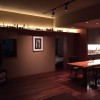
Theme:Home Lighting Interviewer: Angkana Kongchatri Tan:Today we will have a light topic talking about home lighting, I chose this topic because last month (May 2016) I and Singapore staffs had a chance to visit Mr Mende’s new house in Tokyo during company trip. Mende: Ahhhh… what time did you come, at night right? Tan:We came around 9.30pm or 10pm. I think most of us have a same feeling that your place is very impressive. Firstly about atmosphere has a very warm welcome feeling with wood finishing, furniture, all decorative stuff and also lighting helps to enhance atmosphere be more warm. So today I would like to have Mr Mende to share some of your experiences about home lighting. Mende: My house you know, I and my wife don’t like to decorate so much, we do prefer on the simple way of living and keep all stuffs in storage. For my new place, I am quite proud of use real material finishes like wood and stone, paper and plaster. But this topic is quite difficult to say because home lighting is very particular for each family. Each family has different comfortable feeling and value of life, such as Japanese or Thai may have much brighter perception of brightness comparing to European people, right. Tan: How about you and your wife, do you have the same or different perception? Mende: We have slightly different perception, like my wife is much more natural. For…
Newsletter vol.074
Published:05.July 2016 ・Activity 1/The 53rd City Night Walk in Yokohama Bashamichi and Isezaki-cho(18/03/2016) ・Activity 2/The 51st Regular Round Table Discussion(01/04/2016) The 53rd City Night Walk in Yokohama Bashamichi and Isezaki-cho 18.March.2016 Yuki Takeuchi + Eiki Takeuchi + Ginko Mochizuki + Huang Simen + Shinichi Sakaguchi We divided into two groups walked in Bashamichi and the other two in Isezaki-cho, Northside and Eastside of JR Kannai Station in Yokohama. Those two areas are geographically close but have different characters. ■Over 150 years old gas lamps and early modern architectures create nostalgic scenarios in Bashamichi. Most elements and buildings have been modernized to suit for urban life style in Isezaki-cho. Both Bashamichi and Isezaki-cho are on the same stretch of the city, but have totally in contrast of these characters. We started exploring those two areas to find Heroes and Villains of light, and to reveal what kind of light defines the character of each area. Contrast between gas lamp and shop interior light. ■Bashamichi Area Bashamichi was the first place that gas lamps were installed in Japan. Before those gas lamps were produced in Japan, people carried portable lanterns with candle light. We started the walk, imagining how people felt when they saw gas lamps at the first time. Group 1 started at Kannai Station. Arriving at Bashamichi and walking further down to the junction, first light to note was stadium lighting. We still had a long distance to Yokohama Stadium though,…

Vol.033 – Life Plan:To be active as a professional after coming back from maternity leave
To be active as a professional after coming back from maternity leave Interviewer: Mami Kono the origin that Graduation production of the university that became the starting point for the world of light Imagine 5-years ahead and set a goal Kono:Today I`d like to talk about making a life plan. And today is your birthday, so Happy Birthday!! Mende:Yes, 66 today. Repeated digits, seems like a good number, but it’s kind of an in-between year. I don`t know if I am classified as old or young?! Kono:I turn 32 this year. Mende:Wow, 32…When you were 29, just turning 30, did you feel the “I can`t believe I`m turning 30!” blues? Kono:Yes!! I wasn`t married yet, but I had a really fulfilling job and private life. But I felt lost about where I was headed in life. Mende: I always set goals or have an image marked off in 10-year segments. Kono:When did you start setting goals? Mende:When was that? I quit my office job at 40. Maybe after that, I really started to envision things around 42 or 43 and then what I would be doing at 52 or 53 and so on. Kono:I returned from LPA Singapore this year and now I am going to have a baby. Up until now, all my time and energy went to whatever I wanted to do. But now I have a husband and soon a baby, I can`t live the single life anymore!…

Newsletter vol.073
Date of Issue : 2016.04.21 ・Light up Ninja at Kowloon Park, Hong Kong (2016.02.19-02.20) ・Workshop in iLight Marina Bay 2016, Singapore (2016.03.05-03.27) Newsletter Vol.73 Click here to download Light up Ninja at Kowloon Park, Hong Kong Create Future City by Lantern ! 2016.02.19-02.20 Blanche Lam+Yin Yin Fung+Yuko Wong+Candy Cheung This is the first Lighting Detective event in Hong Kong! This workshop is led by 2015 Bi-city Biennale of Urbanism\ Architecture to explore people’s vision of Hong Kong nightscape. Over 150 participants take part in this meaningful workshop to create future city by lantern. Beautiful lanterns created Under Hong Kong edition of the 2015 Bi-city Biennale of Urbanism/Architecture (the Biennale), Light up Ninja came to Kowloon Park to hold the lantern creating workshop. The theme of this year is ‘Visions 2050: Lifestyle and the Smart City’, we would like participants to play with Light and imagine Future City through Lantern Making. The vision of the younger generation is the key for creating the city of the future. We encourage kids and adults to create and express the future through lantern making. Participants would enjoy their lantern display and find out comfortable relation between Light and Shadow at Kowloon Park. We had three workshops which were for university students, kids and open to public. Over 150 participants created lanterns to share their ideas during the workshop. (Yuko Wong) ■Day 1: Student Workshop /Lantern Creating Workshop. Participants and LPA staff group photo Several Tertiary and…

Vol.032 – Drawing shadows on white paper. Drawing lighting on blue paper.
Drawing shadows on white paper. Drawing lighting on blue paper. Interviewer: Masahiro Iwata Iwata:Today I`d like to talk about the differences between painting and lighting design. From an early age I started painting with water colors. Now, I have a habit of seeing most visual spaces in terms of light and shadow. For example the intricate work of the eaves of an old temple reflecting light from the ground or light streaming into spaces of a building. When I first started at LPA you said that “lighting is similar to water colors.” That statement made an impression on me, but what did you actually mean by it? Mende:Did I really say that?! Well, in water color painting layer after layer of paint is used to complete a painting and in lighting design layer after layer of light is often used to complete a space. Maybe this idea of layering colors is similar. A lighting designer must use the beam of light coming from a fixture like a paintbrush to define a space. A large paintbrush might gently sweep a space and a small brush might highlight fine detail. I am always thinking “if I had this fixture in this space” and I can visualize and imagine the painting I would want to draw. Long ago I failed the entrance exam to an art university, but I spent a great deal of time painting and studying watercolors to past the exam the…
Vol.031 – Words are Tricky, but Important
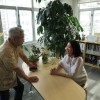
Words are Tricky, but Important Interviewer: Haruka Sakoda 2. It`s important to flip through a dictionary from time to time 3. City Walk. Brainstorming for keywords to describe images. Sakoda:At work I feel it is better to make a phone call then to discuss a project over email with a client in Hong Kong or China. Without using visual aids or images one really has to think about what they are saying and choose words carefully. Mende:Are you good with words? Were you talkative from a young age or kept a diary? Sakoda:No, and my writing is also hard to understand. I think I rely on a lot of onomatopoeic and imitative words instead of going into a full explanation. I realize this since now I have to use English at work. For example, in Japanese I might say something like “fuwaa” which means floating or a sense of weightlessness. I don`t know how to explain this sensation. When talking with a client, usually English is neither of our native language and English skill levels are also different. Usually the speaker will fall into grammatical habits that confuse the meaning and construe word interpretation. In order to correctly express one`s ideas manner of speaking and word choice are important. Are you careful of your word choices or conscious of wording? Mende:During a lecture, I feel my words can touch and move the audience in different ways and that is all I…
Vol.028 – About Books
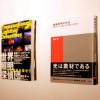
About Books Interviewer: Leon Hitsu Hitsu:Today I`d like to talk about books. First, I`d like to introduce myself through a selection of books I have brought with me. Mende:I see. Let`s see what genera of books you like. Hitsu:I am originally from the school of education, so my first book is about education. Next a guide for writing a master`s thesis, and lastly a book about graphics. By the way, my master`s thesis is titled “Language-less Communication,” in other words, pictograms. Lastly, lately, I have been reading a lot of books related to architecture. Mende:You are quite a reader of various topics! Hitsu:Thank you. I think it really suits me. My goal is not becoming a famous designer, but rather a professor, like you. Being in this place at this time might not be important for becoming a teacher, but I really want to become a college professor or researcher in the future… Or maybe work at a critic. Lately, I have got the idea to publish an encyclopedia of lighting design terminology in three languages, English, Japanese, and China. Or maybe a book explaining my own theories; something to communicate information and educate the public. This is what I am interested in. Mende:Sounds good, but very challenging. You are not a specialist in terminology. How do you plan to put that type of book together? Hitsu: I don`t think it will be that difficult. I have looked, but there are…

Vol.025– Working your way up
Theme『Working your way up』 Interviewer: Masafumi Yamamoto Yamamoto Masa:Today I would like to talk about working your way up the professional ladder As a student one is still in a position of have one’s ideas and opinions heard, now as a member of society, I feel I can’t completely listen to everyone’s ideas. I don`t think I am a very good listener when I comes to opinions. Mende:That’s what you might think, but in college I think you probably were a better listener than you remember. You were the student leader of the Koizumi Studio, right. I think maybe you just don’t like to listen to other people. When listening to someone’s opinions you have to take in the ideas, interpret, and then react. It`s a very strenuous process. Yamamoto Masa:Mr. Makoto Koizumi is my former college professor. On campus he is open and friendly, but during extra-curricular activities he was very strict. We got into a row once and I still remember it. One should always remember the names of those they are working with. Be genuine when complimenting good food. Know your surroundings, be considerate of those around you, and act accordingly. These are a few things I wasn’t able to do and learned the hard way. Mende:You were not in my studio class at the university so I didn’t think you had an interest in light and lighting. But here you are at LPA. What changed your mind?…

Vol.022 – Teaching about light
Teaching about light Interviewer: Sachiko Segawa It is important to be sensitive to and sense light in one`s immediate presence. A class experience on the three primary colors of light. Segawa:Today I would like to talk about “Teaching about Light.” Mende:If I`m not mistaken, you are one of my former students. Do you have an interest in education? Segawa: Yes, I do, but the number one reason I chose this topic is because I am a mother. My mother was a teacher, so when I was younger an “educator” was always an immediate presence. At home, she was always our mother, but to other children, she was the “teacher.” She always wore those two hats. I didn`t progress into the field of education, but at work, I have had to train new and part-time staff. I have come to realize that teaching somebody about light is a difficult task. You taught at Musashino Art University for 10 years. Did you find it challenging at times? Mende:I never really thought of it as challenging. My studio class was titled “Lighting Seminar,” but not everyone was motived to become a lighting designer. Maybe two or three students out of 10 wanted to be a lighting designer. The other students had different interests and motivations and I would struggle with whether it was best to teach them from a technical point of view of or sensory point of view. Segawa: I would think that…
Vol.021 – What is the meaning of working?
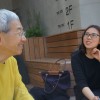
Theme:What is the meaning of working? Interviewer: Yuhang Zhong Yuhang:Today I`d like to talk about “working.” I become a member of the workforce four years ago and I continue to struggle with the question “Why do we work?” One reason I went to graduate school was not because I didn`t want to work, but I couldn`t comprehend the reason for working. At that period in my life I was able to prolong working and escaped to graduate school. 職務中の鐘 真剣に食器を洗う Mende:So going to graduate school was kind of like a suspended jail term. Yuhang: Yes, maybe something like that. Do you ever question why you work? Mende:When I was younger, I really liked to work. I was one of those people who didn`t question why I worked, but also after four years of college I felt a responsibility to work. Yuhang:Four years goes by really fast and I really didn`t take much time to reflect on my life. At graduate school, I was soon forced to face reality and start the process of looking for a job. At interviews I was repeatedly asked “What do I think about having a job?” I memorized a pretty phrase and got by, but I couldn`t envision myself working five years or ten years down the road. When asked about my motivation for working, I keep coming back to the original question, “Why do we work?” Here is this question, again and again. Mende: In…

Vol.020 – Raising Creative Children
Theme:Raising Creative Children Interviewer: Rachel Nakayama Rachel:Today I`d like to talk about children and design education. I think design education should be about developing free thought and the capacity to use free thought to solve problems. There is a weekly TV program on NHK called “Design あ;” I believe you had the opportunity make an appearance on the show. The program takes everyday objects and ideas and explains their design process in very simple animation, going right to the foundation or origin of that object. For example, “Why is a plastic bottle cap shaped like it is and why does it screw on?” My three kids and I really look forward to watching it every week. samples of the contents “Design A” ①one pair of formula、②My circle and square、③ design people 、④Everyone’s「Ah」 Saturday Morning:All three children are obsessed with A”Design A” Mende:You and your kids wake up at 7:00 on a Saturday to watch the show? Pretty early for the weekend. Rachel: Yes, we are early risers, but sometimes we sleep in and miss the show. Everything in the program, from music to color scheme to word choice is easy to understand and beautifully artistic. I think it`s an interface than to appeals to children and adults, alike. Mende:You describe this program called “Design あ” using the word design, but I think it is more of asking “Why?” of everyday things. Asking questions and solving the mystery, is very important. Rachel:Yes, you…

Vol.018 – Architects of Light
Theme: Architects of Light Interviewer: Mikine Yamamoto Yamamoto:Today is a nice day. Japan is lucky to have four seasons and to be able to experience the changes that natural sunlight displays. When I joined LPA 8 years ago I really wanted to design daylight in architecture. Architects like Eero Saarinen, Louis Kahn, and Tadao Ando really incorporate daylight into their buildings and I am inspired by how the architecture, itself, seems to function like a light fixture. When I was a student, I spent most of my free time visiting architecture, especially museums. The space in museums is so dramatic and compelling. I think it is really important to just experience architecture. Spend time enjoying the spaces and be moved by the various expressions brought on by changes throughout the day. That being said, the fundamental and emotional incorporation of light in Scandinavian architecture and Asian architecture is very different. Kimbell Art Museumby Louis Kahn Kresge Chapel : MIT Chapel by Eero Saarinen Mende:I can`t say which is superior, but I believe Scandinavian architects are intuitively keen to detail. The angle of the sun is very low in Northern Europe and Scandinavia and it penetrates to the interior of buildings. It feels like the towns of Northern Europe and Scandinavia seem to be designed with the rising and setting of the sun in mind. The long shadows leave a lasting impression and because there are shadows the light really stands out…

Vol.015– An Encouragement of Morning
Interviewer: Yumi Honda Theme: An Encouragement of Morning Honda Mr. Mende, you are a morning person and come into the office early, but that lifestyle and working as a lighting designer seems to be contradictory. I am also a morning person, so today I would like to discuss waking up early and how we spend the hours in our day. As lighting designers we have late on-site meetings which leads many to become nightowls. Intrinsically, the city lights and nightscape are the reason why many choose to become lighting designers. How about you? Have you always been a morning person? Remnant of the night and light in the morning Refreshed by sun light in the morning during vacation Mende Ok, so I take it that today’s theme is “recommending being an early riser for lighting designers.” I have always been an early riser. How about you? Do you feel better in the morning? Honda Not always, but I like to take in the morning sun. Mende If I have a choice, I think I’m more of a evening person. Honda Yes, I like the evening too, but I really like the refreshing feeling of the morning sun. Even if I have not had a good night’s sleep the sunrise is refreshing. In the book Makurano Sohshi, or The Pillow Book, the opening line is “In spring, the dawn – when the slowly paling mountain rim is tinged with red…” Or “Winter, the early morning…”…

Vol.014 – Lighting for Lighting Design Office
Interviewer: Shunichi Ikeda Theme:Lighting for Lighting Design Office Ikeda Today I`d like to discuss the lighting in a lighting design office. I have always wondered about architects and interior designers who design their own offices based on their own style preferences. I find it kind of interesting. So, I was also wondering about a lighting designer`s office? Is it a place to test elaborate lighting design methods? If you don`t mind, I`d like to pick apart the LPA office. When I first came to LPA I noticed that all of the lighting is a warm color temperature. If it was a restaurant or place of leisure I would understand, but as an office not many places are equipped with all warm color temperature lighting. Also, the ceiling indirect lighting, non-glare desk lights, 2F studio lighting controls were all impressive and dramatic. When you are designing office lighting, what things do you care about most? Stuio at party Working Space Task & ambient lighting with incandescent lamp color Mende It is all a presentation for guests. I want them to think, “Hey, I really liked that lighting style at LPA, so I`ll try to copy it.” I want to design lighting that makes guests think this. This is the place to display our theories and logic. What is good and what is bad. And it is absolutely unacceptable if the light sources are directly visible. Ikeda The 2F studio is used for visitor reception and…

Vol.011 – How to Polish up your Womanly Spirit
Interviewer: Misa Fujii A Love letter from Kaoru Mende: Dear Misa, I think you are a person with a lot of vitality and an amazing lighting designer. When I say “Feel free to think freely,” you always seem to come up with a killer idea, unlike anyone else. I think that if we wait and see, you are headed towards becoming an incredible woman of unbound spirit. Fujii : I`d like to start today by recalling the love letter you wrote me. Mende : Oh, yes… I wrote this on the flight coming back to Tokyo from Shanghai. I think I had finished a couple glasses of champagne. Fujii : So, you were feeling good and scribbled out this love letter. Mende : I just wanted to acknowledge and praise the innocent power of imagination dwelling inside of you. This purity and devotion is an irreplaceable qualification for not just a lighting designer, but any designer in general. Fujii : Well, how about you? Are you pure and innocent? Mende : That is a good question! I don`t think I am innocent, but maybe pure. I have been told I play favorites to all sides of the field. Fujii : Really?! Mende : Oh, yes and maybe they are right. In business situations, I try not to be too opinionated so we can all get along. In other words, there are times when you have to suppress your opinions and listen to what the others have to say. …

Vol.007 – The role of a designer
Interviewer: Momoko Muraoka Theme:The role of a designer Muraoka: Today I would like to talk about the role of a designer. Of course, there is our regular work consulting on design projects, but also as lighting designers, we have helped launch a professional organization and are now engaged in recovery projects for the Great East Japan Earthquake. All of these extracurricular activities have started me thinking, and as a designer, I want to be more subjective to the value of production in the world. Mr. Mende, what do you think the role of a designer is? Mende: hmmm…That’s a good question. What do you think? Muraoka: Well, this is a little idealistic, but to scoop up things that aren’t yet seen or noticed and mold them into a form that is helpful and makes everyone`s live just a little bit happier. Mende: Yes, a designer might be a craftsman who makes people’s dreams and little bits of happiness a reality. A designer is an artisan and a thinker and simply put, a hostess or entertainer for society. Muraoka: There are many different types of designers and a lighting designer might be particular in that there is really no solid form of our work. Mende: But what about musicians or chefs there is no real solid form here, either. A massage or theatrics also makes people happy through healing or a performance. Is this design? Is good food a design? Muraoka: Oh,…

Vol.006 – Architectural Lighting and Stage Lighting
Interviewer: Genki Watanabe Theme: Architectural Lighting and Stage Lighting Watanabe: Today, I`d like to talk about “Architecture Lighting and Stage Lighting.” At the university, I majored in stage lighting. Mende: What sparked your interest in stage lighting? Watanabe: Since I was little, I love to watch movies and theatre. After graduating high school I had the vague idea that I wanted to go abroad, so I decided to go on a language exchange in China. After about a year, I had the opportunity to go to a college theatre production. Chinese stage lighting is very flamboyant! This is the first time I really thought about stage lighting. Later I decided to study at this university. Mende: Why did you move towards architectural lighting while you were studying stage lighting. Watanabe: While studying stage lighting, I realized and felt like there were limits or constraints in this field. I felt like I needed to work with lighting design that is closer to our daily lives and society in general and started to focus on architectural lighting. Mende: Don`t you think there are any constraints or restrictions in architectural lighting.?! What is the difference between stage lighting and architectural lighting? Watanabe: I think there are several differences. Even during the design phase of stage lighting, it is a very hands-on approach to design. A Lot of time is spent at the theater and directly working on the stage. Mende: I see. With architectural lighting, after about 80% of the work…

Vol.005 – Disaster Area Lighting
Theme: Disaster Area Lighting Interviewer: Yukiko Saito Saito I was born in Rikuzentakada City, Iwate Prefecture, an area devastated by the 2011 earthquake and tsunami. I would like to talk today about “Disaster Area Lighting.” Mende Have you visited the area after the earthquake? Saito Yes, three times. Mende It is just one year ago this month. They are starting to slow clear away the debris and reclaim the area. Saito Yes. In December most of the debris was hauled away and two stop lights in the downtown area were erected. Seven months after the disaster in November there were still no street lights of any kind. This story made the new since it was so dark and a little scary at night. Is there anything we can do as lighting professionals? Mende The city was devastated by a natural disaster that wiped out all power poles and even underground electrical wiring and ducts. It’s a tough situation to even get electricity to the area. However, solar panel mounted street lights don`t need any electrical wiring. It might be wise for the government to buy and issue solar power lighting to these areas. Even in times of a power outage, lighting with capacity to generated electricity from a natural source is a good backup plan. Saito When we drove through the debris cover area, we only had the car headlights for navigation with a few house lights in the distance. I`m just an amateur, but I can`t help but…
Vol.073 – The Shinsekai/Tsutenkaku Area: The Light of “No Double-Dipping”
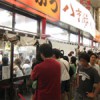
Ever seen a sign that says “No Double-Dipping”? These days you don’t see them as much, but you used to find them in the立ち食い (tachigui – standing eat) kushiage (deep-fried skewer) shops in the old downtown areas of Osaka. You’d be chugging down cheap booze like “Poppy” or “Bakudan” while watching piping hot skewers get fried right in front of you. Then, you’d dunk the whole skewer into a shallow, enamel bowl of watery Worcestershire sauce and devour it in one go. I hear this is the original Osaka-style kushiage culture. The “no double-dipping” rule means you absolutely cannot dip a skewer back into the sauce once it’s touched your mouth. Of course, there’s a huge variety of kushiage ingredients. I’m a big fan of this kind of place, so whenever I went to Osaka on business in the old days, I’d often soak in this atmosphere by myself. These kushiage joints always have a pile of shredded cabbage for all you can eat, but it’s funny – there are hardly any soft leaves, mostly just the hard core and the bits around it. And it’s surprisingly good! You take a big bite of a sauce-covered skewer and immediately follow it with a crunchy mouthful of cabbage. That textural contrast is just so satisfying. But seriously, where do all the soft cabbage leaves disappear to? I’ve been going to Osaka quite a bit for the past five or six years….