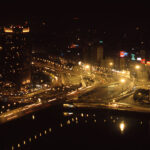
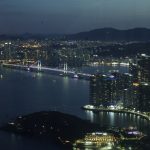
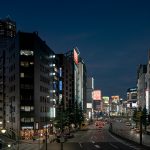
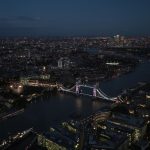
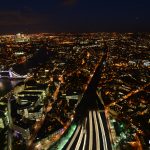
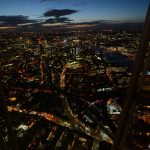
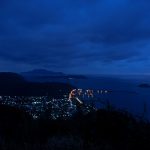
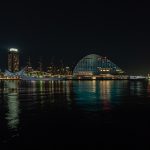
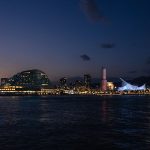
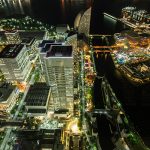
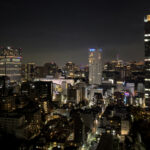
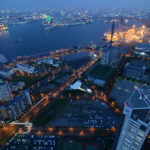
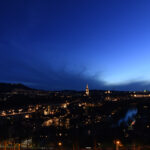
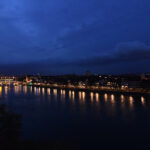
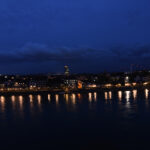
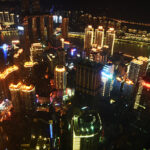
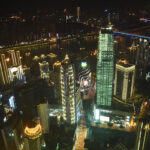
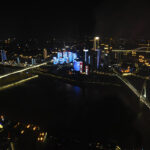
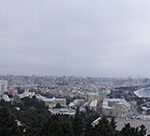
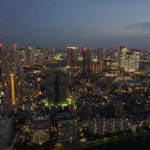
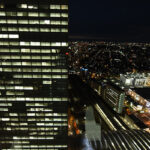
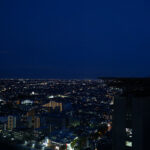
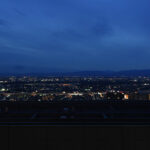
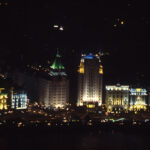
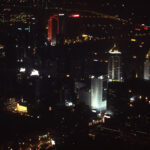
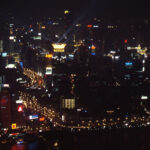
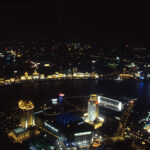
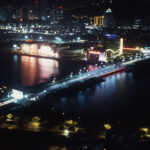
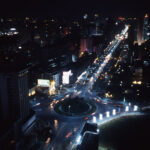
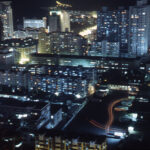
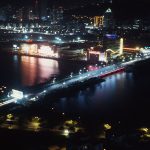
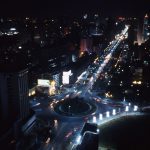
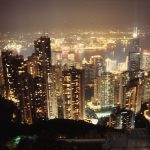
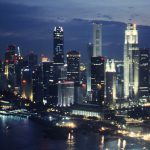
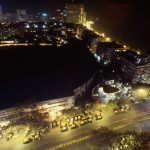
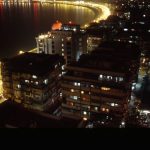
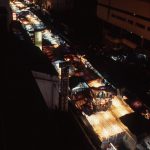
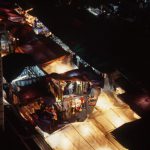
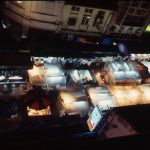
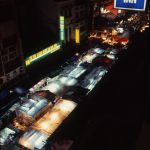
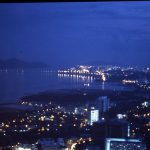
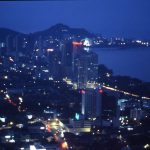
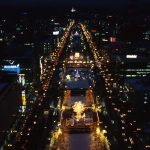
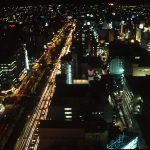
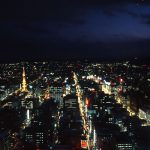
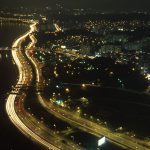
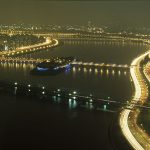
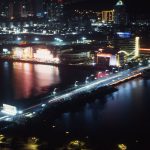
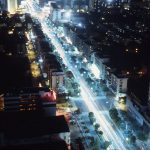
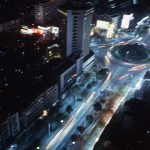
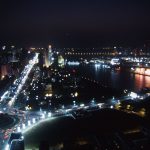
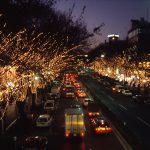
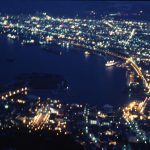
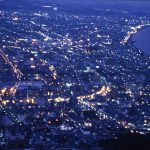
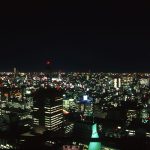
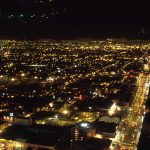
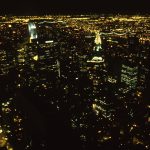
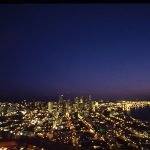
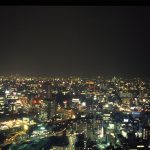
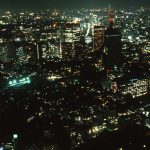
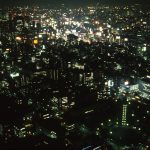
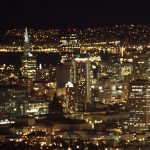
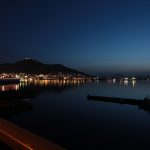
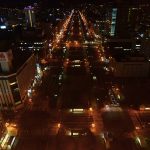
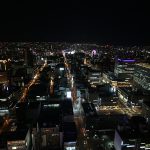
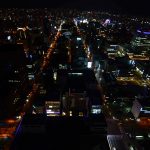
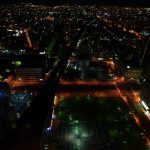
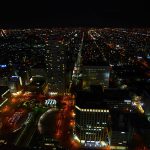
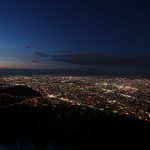
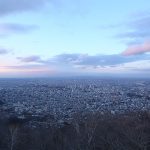
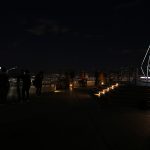
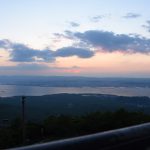
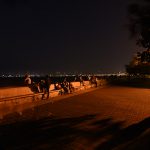
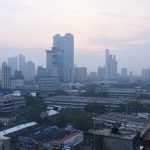
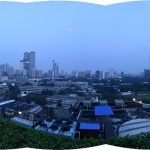
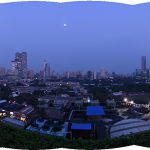
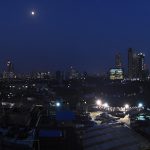
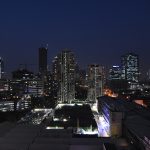
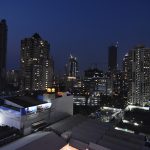
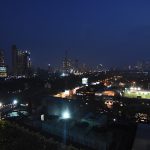
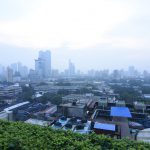
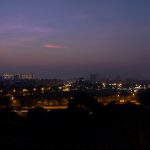
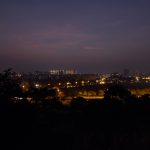
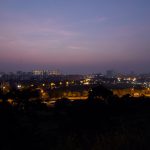
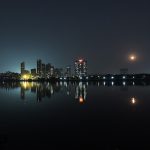
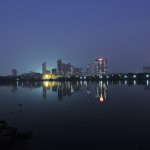
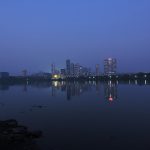
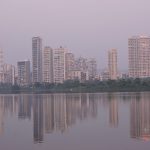
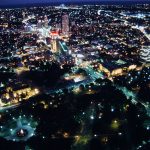
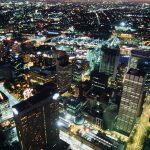
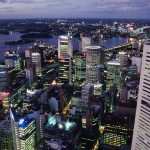
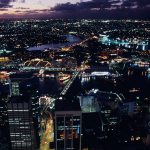
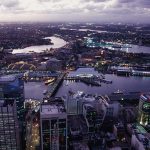
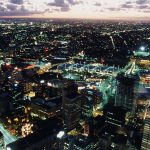
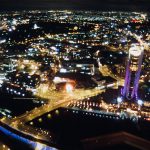
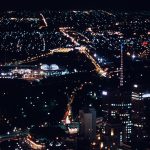
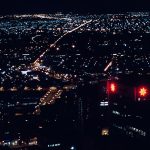
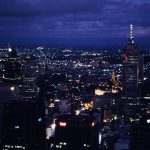
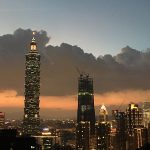
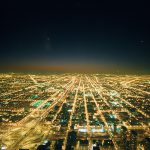
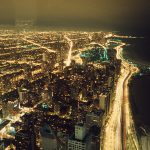
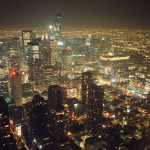
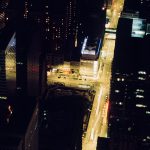
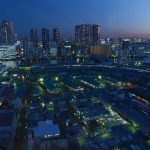
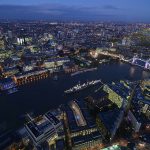
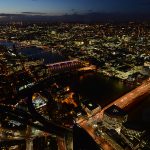
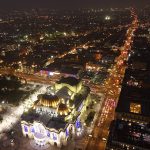
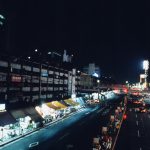
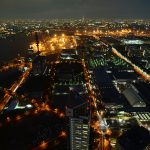
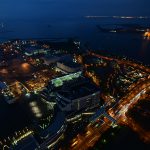
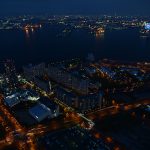
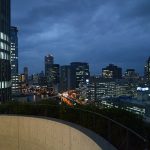
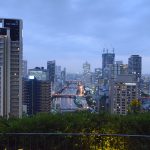
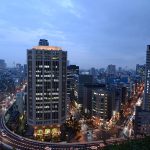
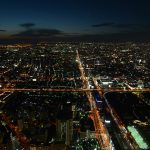
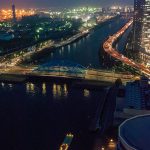
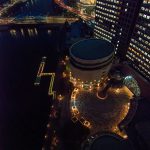
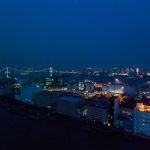
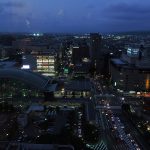
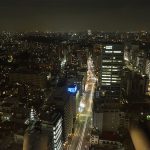
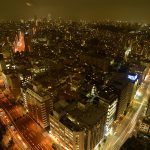
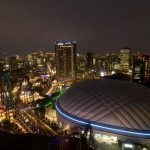
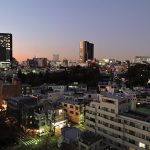
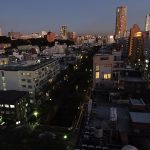
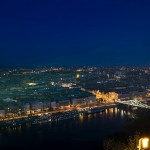
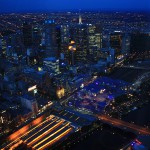
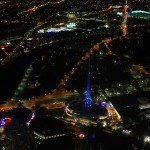
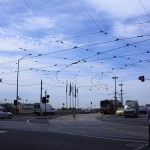
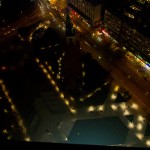
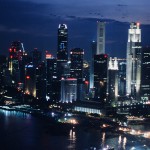
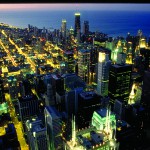
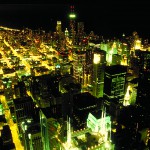
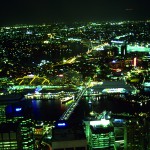
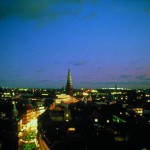
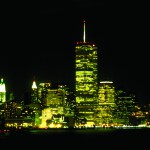
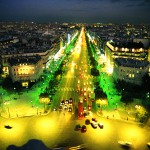
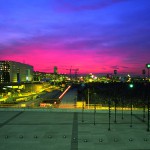
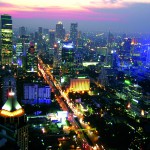
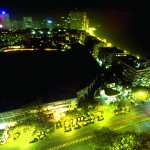
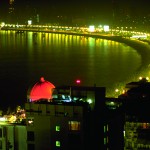
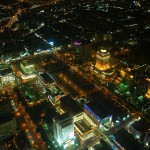
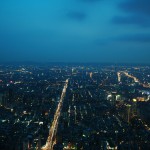
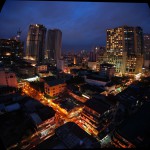
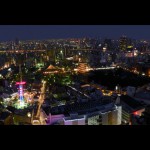
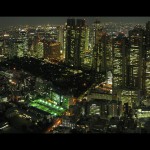
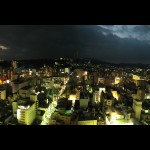
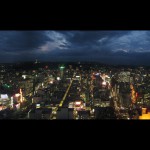
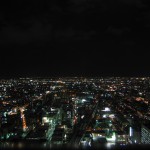
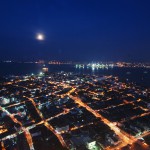
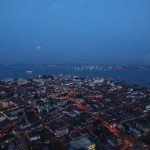
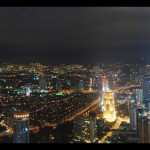
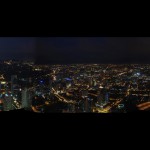
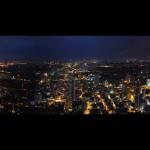
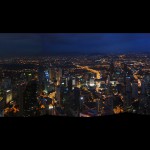
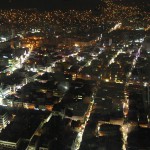
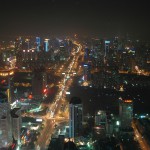
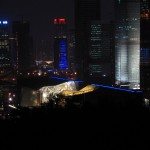
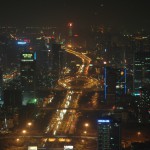
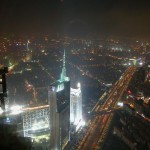
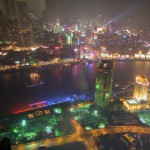
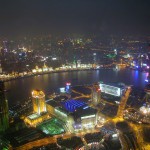
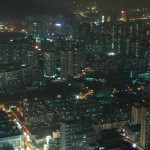
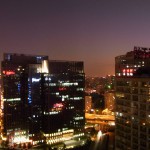
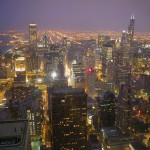
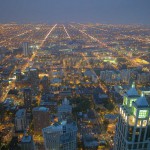
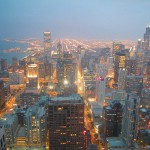
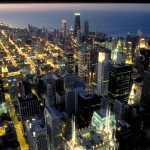
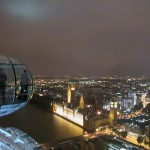
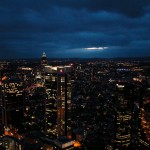
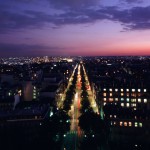
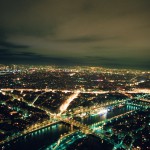
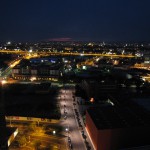
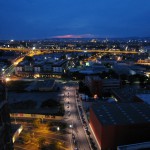
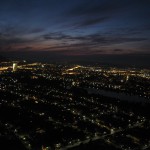
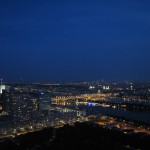
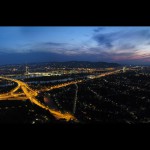
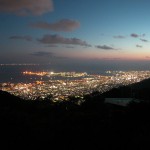
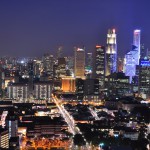
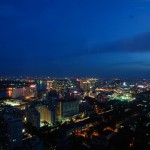
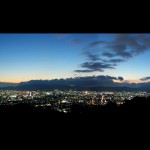
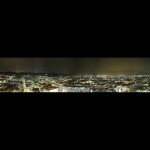
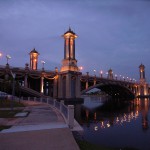
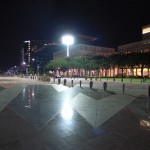
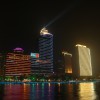
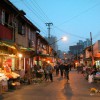
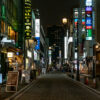
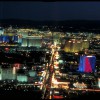
Compared to many cities, Yokohama is a relatively open city. Even with large high-raise buildings close-by you don’t feel enclosed and the added factor of a waterfront can help make anyone feel refreshed. The continually changing point of view from the Cosmos World Ferris wheel is a great way to observe the city. The Landmark Tower is often thought of as the symbol of Yokohama, but the Cosmos World Ferris Wheel could be the runner-up. In the dark night sky the Ferris wheel draws a perfectly beautiful circle of transparent layers of light, adding a deep appeal to the Yokohama nightscape. Looking south from the top of the Yokohama Cosmos World Ferris wheel. The illuminated Red Brick Warehouse expresses its self beautifully as it blends with the surroundings area and the blue twilight settling in on the Yokohama Bay. Ohsanbashi Pier and Yamashita Wharf complete the background. Looking from the vicinity of Yokohama Customs towards the Landmark Tower. In this newly developed area space is comparatively open. With only a few high-raise buildings, and reflection on the water the city seems bigger than it really is.
2022.11.4-5 Sachiko Segawa Surprisingly, this survey of the Sawara district marks the first time the Lighting Detectives have conducted an investigation within Chiba Prefecture. The team focused on an area designated both as an Important Preservation District for Groups of Traditional Buildings and as a Landscape Formation District. Here, the townscape of merchant houses, which flourished from the Edo period thanks to river transport on the Tone River, still remains. Located about 70 km from Tokyo Station and slightly inland from the Tone River, the Sawara district of Katori City once thrived as a merchant town, to the point it was said to rival Edo itself. However, the town declined during Japan’s period of rapid economic growth. Following a townscape survey in 1974, the value of its historic scenery was reappraised. Today, leveraging its convenient location—just two hours from Tokyo and one hour by train from Narita Airport—the area is being redeveloped as a tourist destination. For this survey, the team limited their scope to the townscape along the Ono River and conducted a nightscape survey. ■Uniquely Designed Lighting Fixtures From JR Narita Line Sawara Station, as we walked toward the Ono River, we were greeted by a bollard topped with a monkey. “Why a monkey…?” we wondered, but as we continued upstream along the river, we encountered bollards adorned with all sorts of figures: rabbits, carp, children, frogs, Ebisu, and more—each one different, with no two alike. These uniquely…

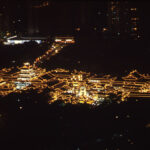
2022.10.01-10.03 Shunichi Ikeda + Genki Watanabe Koyasan (Wakayama Prefecture), a sacred site of Japanese Buddhism with a history of 1,200 years, was inscribed on the UNESCO World Heritage List in 2004 and again in 2016, and is one of the world’s most renowned religious cities. It is also a popular tourist destination, attracting many international visitors prior to the COVID-19 pandemic. Through the distinctive light environment created by the numerous temples and shrines, as well as through the experience of staying at temple lodgings (shukubō), we conducted an investigation into this extraordinary lighting culture from the perspective of the Lighting Detectives. Koyasan is a town situated in a mountain basin at an altitude of 800 meters, surrounded by peaks of around 1,000 meters in northern Wakayama Prefecture. It was founded about 1,200 years ago, in the early Heian period, by the Buddhist monk Kōbō Daishi (Kūkai) as a sacred site of Japanese Buddhism, with Danjō Garan serving as the central temple complex of this religious city.Originally, the entire area of Koyasan was considered part of the grounds of Kongōbu-ji Temple.For us, this was the first time to focus on a religious city in an urban lighting survey. We wanted to examine what the nightscape of this temple town looks like and how the lighting culture of Japan and Buddhism manifests itself in various aspects. ■Okunoin, Kongōbu-ji, Head Temple of Koyasan Shingon Buddhism Okunoin is an expansive cemetery stretching about 2…
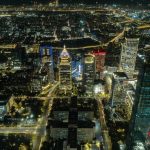
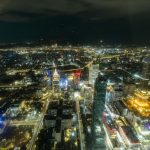
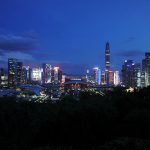
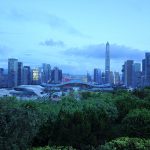
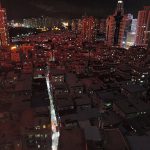
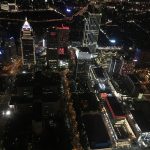
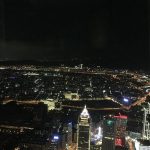
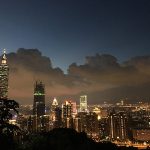
2025.09.12 & 09.18 Lin Hu + Jiang Kunzhi + Lin Huangyi Shenzhen evolved from a fringe town into a high-tech metropolis in about 45 years, and its bold, sustainable urban lighting planning stands out nationally. A two-day field study examined nightscape patterns in its three CBDs, media façades in Futian, and the functional lighting design of the new Gangxia North Metro Station. Unlike older, historically rich Chinese cities, Shenzhen started as a peripheral town and in just about 45 years has become a high-tech modern metropolis. Thanks to its local legislative autonomy, Shenzhen’s urban planning is highly experimental and often serves as a model for other Chinese and even international cities. In urban lighting planning, Shenzhen is a national frontrunner: its nightscape design is bold and innovative, yet the city has also enacted special regulations for ecological protection and light pollution control, showing a clear commitment to sustainability. However, some lighting projects still spark social debate over energy consumption, light pollution, and the use of public resources. To understand more of Shenzhen’s current nightscape, the Shenzhen office team conducted a two-day field study with Mende-san and Kasai-san, focusing on three themes: 1. Nightscape of the three main CBDsWe visited the observation deck at 540 m on the Ping An Finance Center in Futian to take in the scale and layout of the city at night. Looking east toward Luohu, the skyline shows a mix of old and new high-rises, reflecting Shenzhen’s…

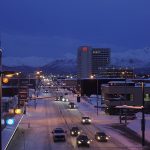
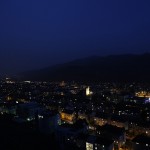
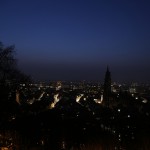
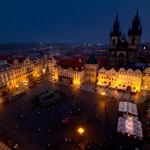
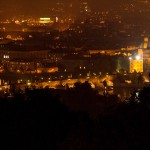
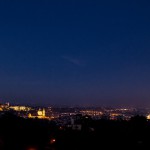
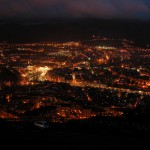
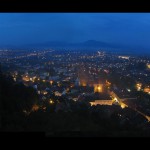
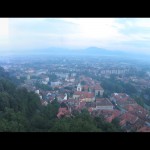
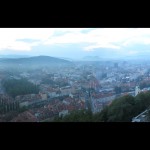
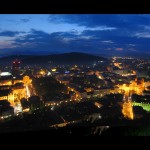
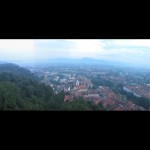
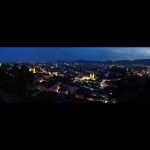
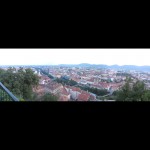
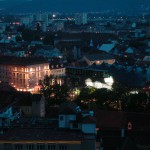
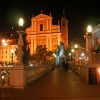
Ljubljana, the self-contained capital of Slovenia has a charming old cityscape made up of buildings topped with red tiled roofs. At dusk, people flock to the Ljubljana River to rest after a busy day and watch the lights come on over the city. Many historical buildings are lit up in this compact downtown, with other lights here and there creating a comfortable rhythm of lighting and darkness. The Tomostovje Bridge designed by Jose Plecnik connects the old city with the new city. Of all the bridges over the Ljubljana River, this is the one most central and with the most foot traffic. The orange lit facade of the Franciskanska Church next to the Presernov Plaza is visible from the bridge.。 Leaving the Presernov Plaza behind, the smaller streets are cloaked in darkness. Shop windows are dimly lit and a few neon signs are aglow down the street. View of the city from Ljubljanski Grad. From the darkness, activity along the river and the illumination of some main buildings creates axis of light across the city.