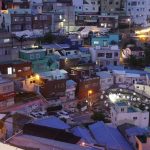
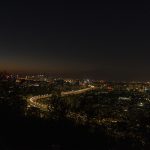
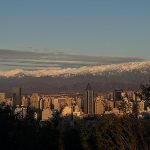
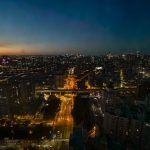
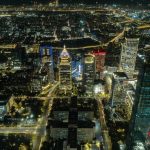
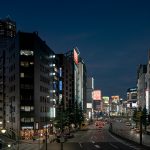
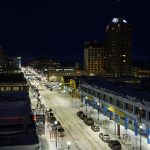
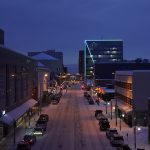
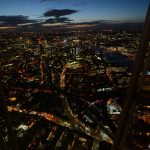
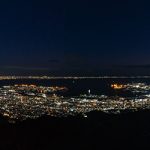
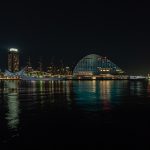
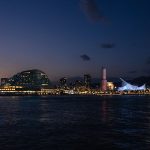
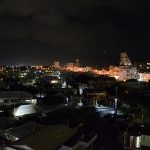
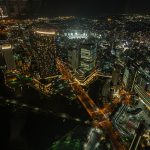
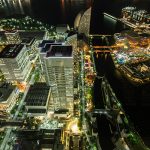
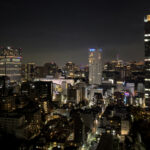
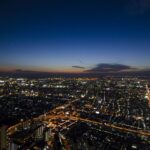
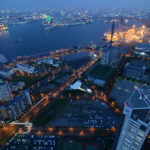
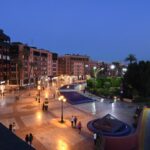
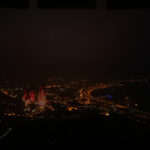
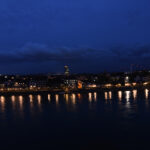
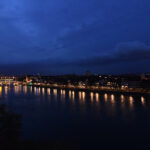
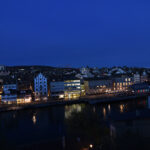
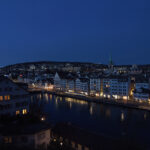
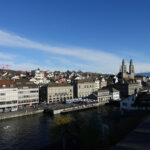
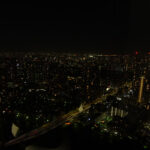
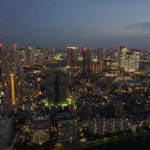
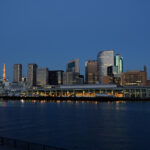
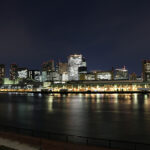
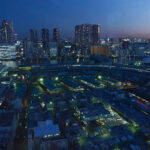
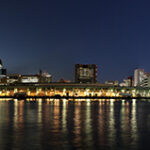
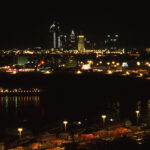
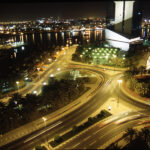
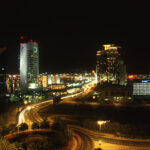
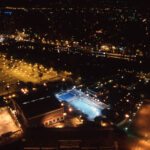
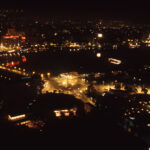
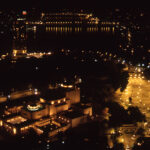
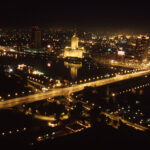
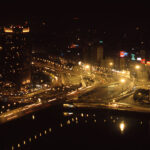
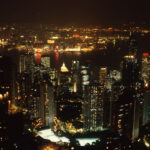
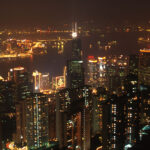
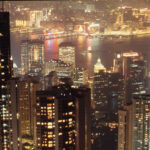
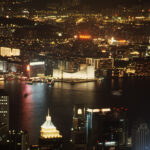
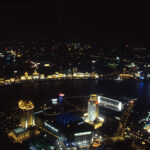
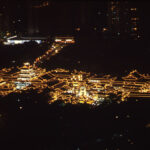
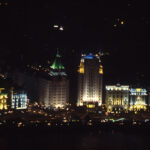
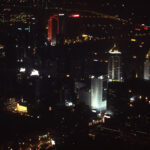
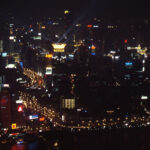
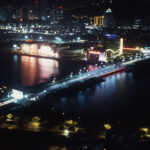
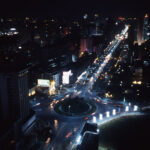
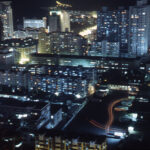
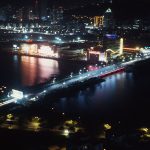
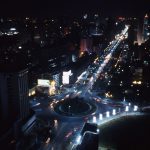
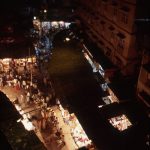
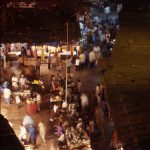
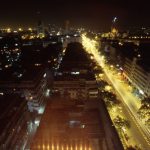
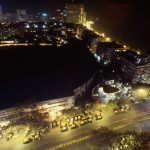
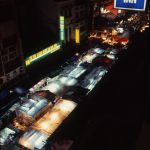
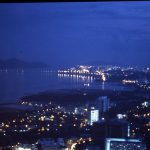
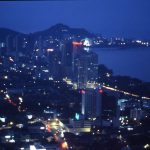
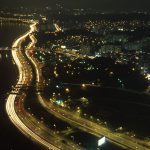
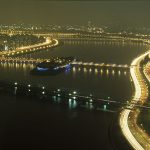
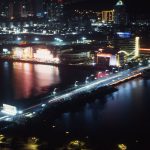
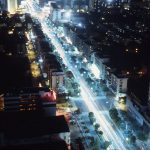
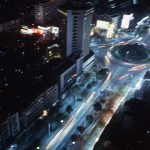
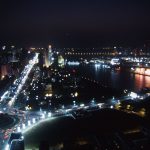
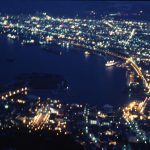
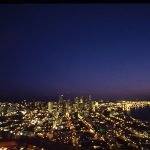
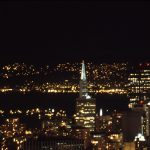
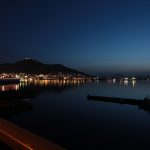
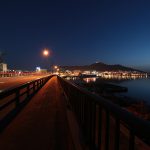
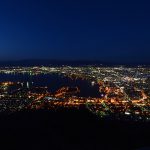
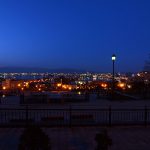
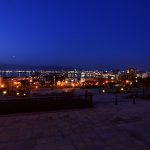
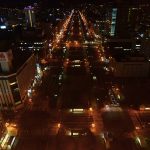
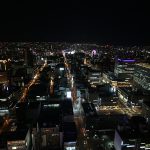
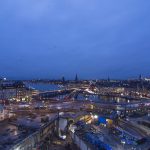
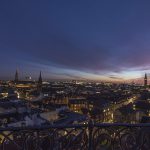
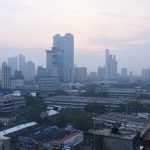
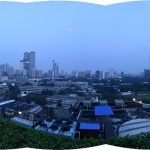
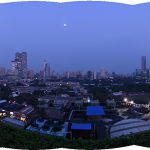
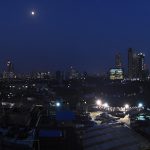
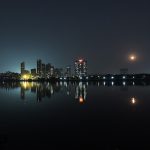
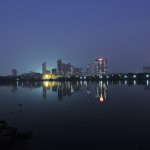
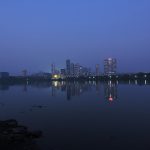
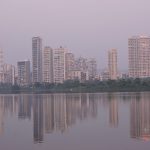
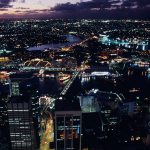
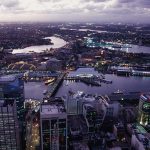
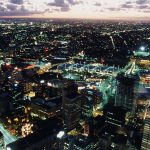
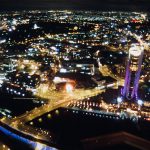
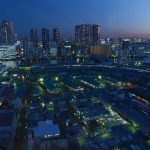
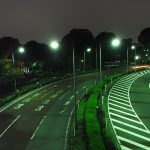
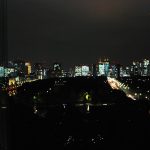
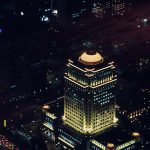
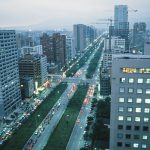
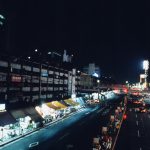
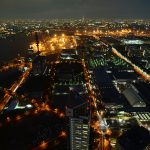
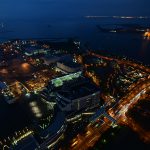
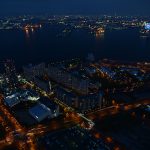
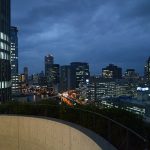
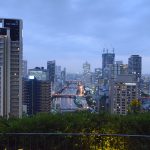
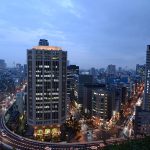
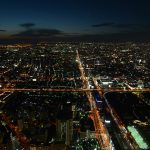
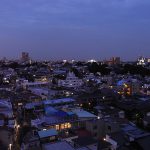
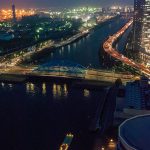
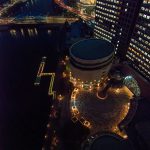
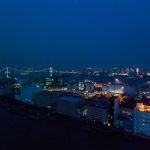
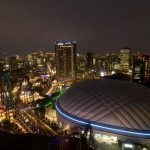
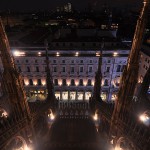
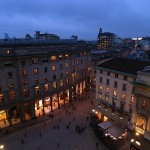
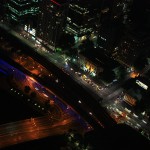
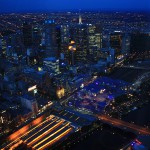
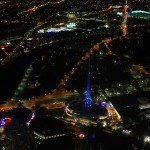
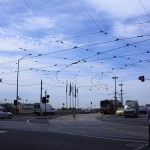
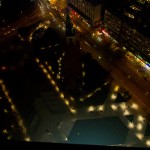
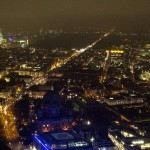
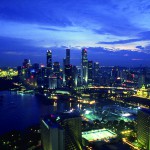
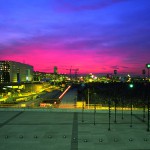
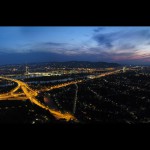
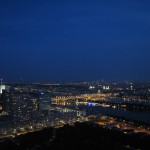
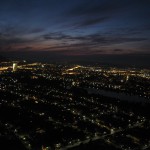
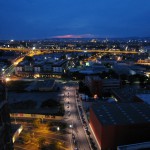
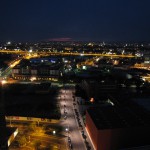
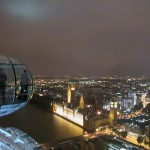
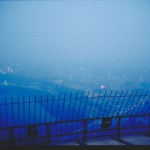
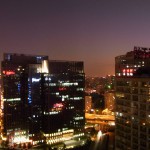
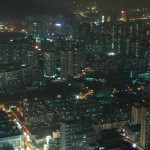
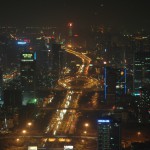
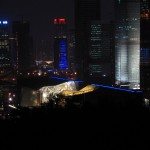
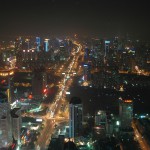
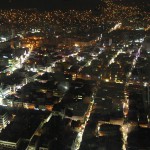
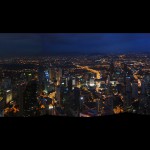
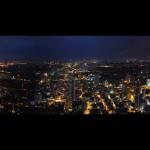
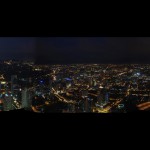
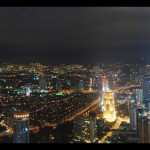
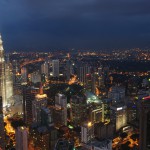
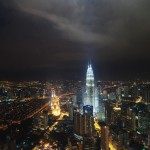
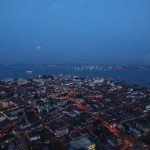
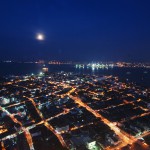
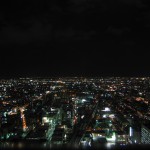
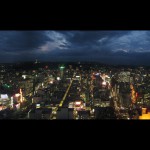
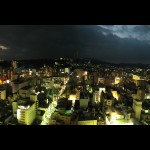
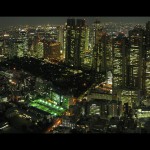
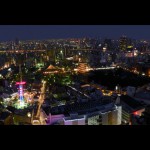
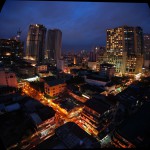
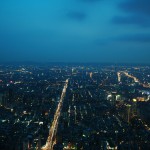
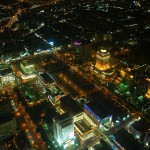
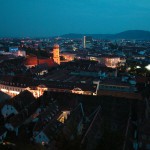
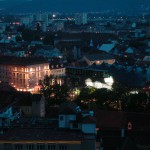
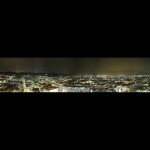
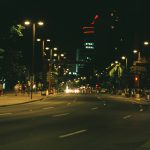
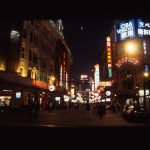
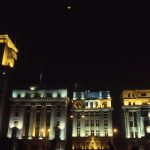
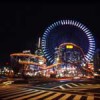
Compared to many cities, Yokohama is a relatively open city. Even with large high-raise buildings close-by you don’t feel enclosed and the added factor of a waterfront can help make anyone feel refreshed. The continually changing point of view from the Cosmos World Ferris wheel is a great way to observe the city. The Landmark Tower is often thought of as the symbol of Yokohama, but the Cosmos World Ferris Wheel could be the runner-up. In the dark night sky the Ferris wheel draws a perfectly beautiful circle of transparent layers of light, adding a deep appeal to the Yokohama nightscape. Looking south from the top of the Yokohama Cosmos World Ferris wheel. The illuminated Red Brick Warehouse expresses its self beautifully as it blends with the surroundings area and the blue twilight settling in on the Yokohama Bay. Ohsanbashi Pier and Yamashita Wharf complete the background. Looking from the vicinity of Yokohama Customs towards the Landmark Tower. In this newly developed area space is comparatively open. With only a few high-raise buildings, and reflection on the water the city seems bigger than it really is.
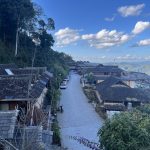
Muslim District within New Development Context2025.11.06-11.09 Quratuaini Jamil + Xu Sunny The survey aims to examine the Muslim Quarter District with a focus on its religious, cultural, and urban context, while assessing how it integrates with the emerging modern development within Xi’an. ■ Brief Summary of Lighting SurveyWith a vast metropolitan population of 12.9 million—of which 4.45% reside in the urban center—Xi’an is a renowned historical and cultural hub in China that pursues an urban planning strategy blending tradition with modernity. The city integrates its rich heritage with the demands of contemporary development while carefully safeguarding key cultural areas. A prime example is the Muslim Quarter, which plays a crucial role in preserving living heritage, ethnic diversity, and the traditional urban fabric. Xi’an’s planning approach emphasizes “development within preservation and preservation within development,” reflected in the harmonious coexistence of new growth and historic architecture. Accordingly, this research focuses on how the old and new parts of the city—particularly distinct areas like the Muslim Quarter—are effectively integrated. ■Xi’An Muslim QuarterOn the first day, we observed the Friday congregational prayer at the Great Mosque of Xi’an. This visit provided a valuable opportunity to study the mosque’s internal spatial organization and architectural characteristics. The Great Mosque of Xi’an is distinctive for its unique synthesis of traditional Chinese architectural language and Islamic religious functions. It differs markedly from the Middle Eastern style—characterized by prominent domes and tall minarets—commonly seen in places like Singapore. Instead,…
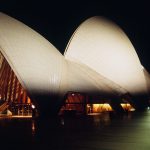
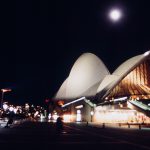
Sydney Lighting Survey: How Sydney CBD glows at night 2019.09.19 – 2019.09.21 Momoko Muraoka + Sunyoung Hwang Sydney, a capital city of New South Wales is famous for its beautiful beaches and iconic Opera House. It makes it to the most populous city of Australia with more than 5.2million population. The climate of Sydney is subtropical with no extreme seasonal differences. Highly saturated clear blue sky, lush greeneries, beautiful waterscape, and iconic Opera House – Sydney is the city that has it all. It is quite a lovely place to be and usually makes it to the top rankings for the most liveable cities in the world. This time, Lighting Detectives flew to Sydney to find out how it lights up at night as a famous tourist destination. The survey focuses on the Sydney CBD (Central Business District) area. When looked down from the Sydney Observatory, the city did not have much of the façade lighting. Many of the buildings were glowing with their interior lights. There were not much of RGB lights nor media facade light except few areas of Darling Harbour and Pitt Street, the shopping district. The shot taken from North Sydney to have an overall view of Sydney CBD with iconic Opera House and Harbour Bridge shows this more clearly. Sydney seemed rather classic with a warm tone of lighting on these iconic features and minimum architectural lights. Interview with the city of Sydney Interview with…
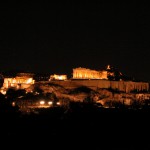
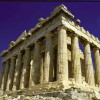
Our survey took place after the dust settled from the construction rush to finish infrastructure for the 2004 Athens Olympics. Around the main tourist attractions the lighting atmosphere was very orderly, but in Athens the ancient and modern co-habitat to create a charming townscape, possibly found in no other city. Under a perfect blue sky, the Parthenon stands surrounded by Doric columns. Over the years under direct sunlight, weathering has taken its toll on the building, but its presence still gives the illusion of a slip back in time. An illuminated Parthenon as viewed from the historic district of Plaka. Seeing the historic townscape, as it must have been in ancient times intertwined with modern adaptations, is one of the attractions of the Athens nightscape. To the eye, significant contrasts in light and dark are apparent in Sintagma Square. Some of the most brightly lit places in the plaza registering 300lx and the places like the stairs leading down to the plaza completely dark. Some fixtures also seem as bright as the sun, almost like afternoon daylight.
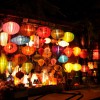
Hoi An was once a flourishing intermediate city of trade. Now, the city is trying to protect the traditional streetscape to appeal as a tourist destination. The nostalgic lantern festival, which was held every full moon, is being reintegrated, as they take on a “back to the basics” attitude towards modern city life. Compared to cities developing vigorously, but blindly economically, Hoi An growth is more diverse. Street vendors line alleyways with festive displays of lanterns. The fantastic atmosphere raises the mood and adds a functional amount of light to these dim side streets with out any street lighting. Built in the 16th century, the Japanese Covered Bridge is a focal point of the old streetscape. Many lanterns hang from the ceiling and spotlights mounted between the roof and bridge softly highlight its features. Inside, cafes are also filled the lanterns, great for creating a relaxing environment. At first glance candles or incandescent lamps seem fitting, but these lanterns are actually all fitted with fluorescent lamps.